Remove Standing Water With Water Extraction in Tucson, AZ
Water that is allowed to sit keeps moving. It drains into carpet and pad, climbs up the base of drywall, and finds its way under baseboards and into the subfloor. Quick Restore of Tucson provides water extraction in Tucson, AZ for homes and businesses dealing with pooled water from a burst pipe, a water heater leak, an overflow, or a storm. We pull the bulk water out, find out how far the moisture reached, and pass the job to drying with the photos and readings that stage depends on.
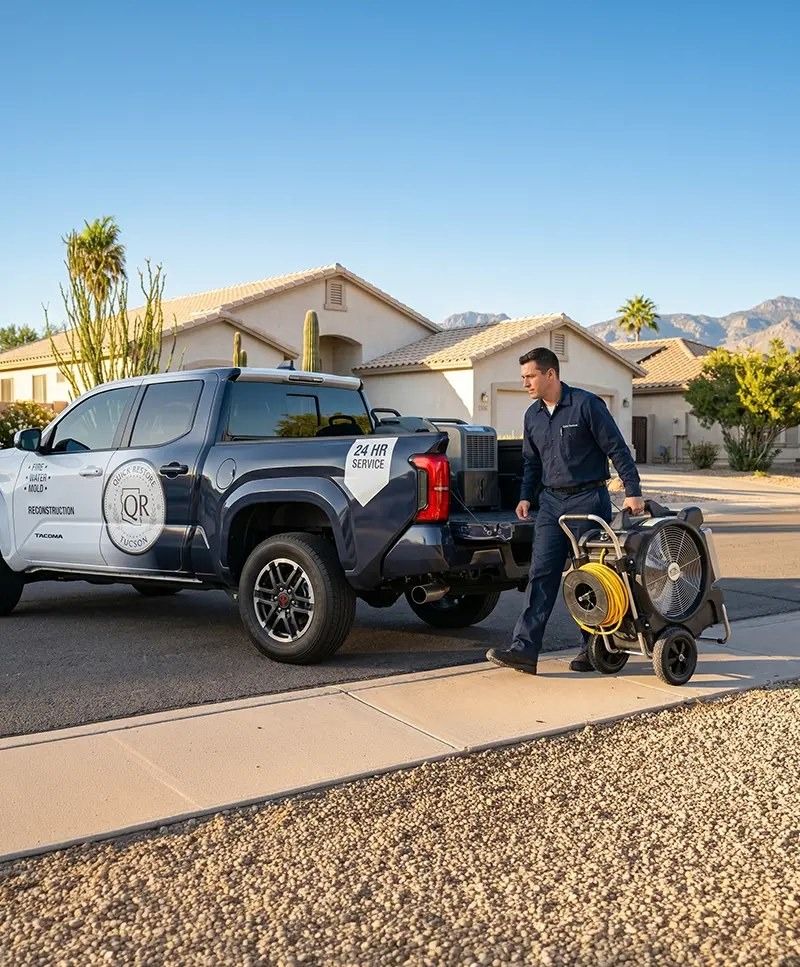
Call (520) 488-6759 and tell us where the water is, whether it is still coming in, and whether you can get to the area without risk. Those answers shape the equipment we bring and the order we work in. We offer 24/7 emergency service, and every emergency reaches a live team member, day or night. We dispatch right away and give you a realistic arrival estimate on the call.
Extraction is the opening move in our water damage restoration work. It is not the finish. Pulling out the water you can see does not dry the building, and the sections below explain what happens before and after.
Check the Water Source and Safe Access Before Removal
Where the water came from decides how we treat it. A split supply line or an overflowing tub puts clean water into the building. Water that enters from outside is different: it brings dirt and debris with it. Greater Tucson's monsoon season, roughly mid-June through September, brings sudden heavy storms, and flash flooding and storm runoff are a common reason water ends up inside homes and businesses here.
Sewage is a separate case. A backup is contaminated, and household tools are the wrong way to deal with it. Keep people and pets away from the area and avoid contact with the water.
Think about electricity before you step into any wet room. Water and power together are dangerous. Stay out of the room if water is reaching:
- Wall outlets or power strips
- Cords, or appliances that are plugged in
- The electrical panel
Never walk through standing water to reach a breaker. If you can get to the panel with dry feet, you can shut off power there. If you cannot, leave it and call your utility or a licensed electrician. When we get there, we look for safety concerns, electrical ones included, and begin extraction only when it is safe to work. If part of the space is not ready, we say so and explain what has to come first.
Extraction removes water. It does not fix whatever let the water in. If a line or fixture is still running, shut off the supply if you can do that safely, and have a licensed plumber or appliance technician make the repair. We handle the water and the damage it left behind. If you cannot tell where the water is coming from, we arrange water leak detection through a partner to find it.
Remove Bulk Water, Then Check What Remains Wet
The sequence shifts a little from job to job, but most extractions follow these steps:
- You call, and we ask about the source, the wet rooms, the depth of the water, and the type of flooring.
- We look over the space for hazards and start once it is safe.
- Before we touch anything, we photograph the water and record where it is, so there is a record of conditions on arrival.
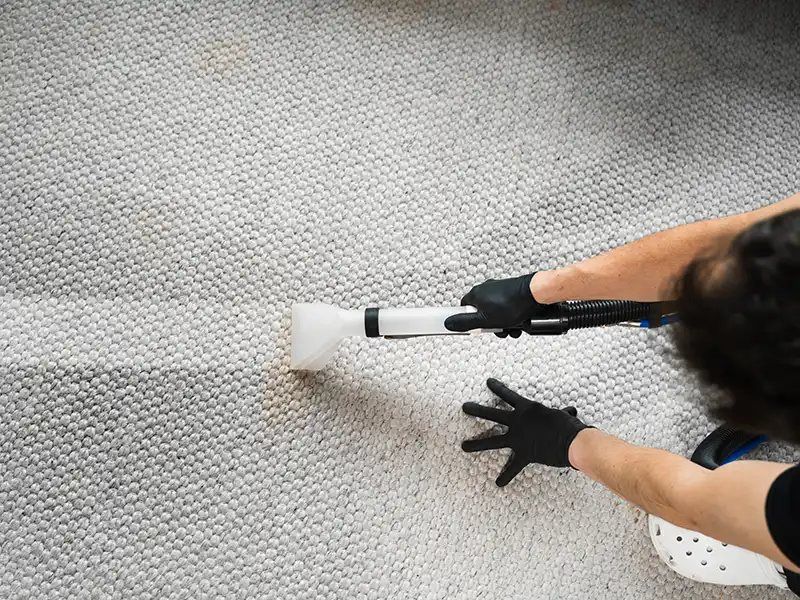
- We take out the standing water. Pumps handle deeper water. On carpet, pad, and hard flooring, extraction equipment pulls the water up and out of the material instead of spreading it around.
- We then check what is still wet: floor edges, baseboards, carpet and pad, the lower part of walls, cabinets, and the rooms next door.
The job is not done when the puddles are gone. Water tucked into floor edges, wall bases, and the space under cabinets keeps doing damage out of sight. Moisture meters tell us which materials are actually wet. A thermal camera shows differences in surface heat that point us toward trouble spots, and the meters confirm what the camera suggests. We write readings down room by room, which shows how far the water traveled and gives us something to compare against once drying starts.
Many Greater Tucson homes are stucco on slab foundations. Water can move into stucco walls and under flooring on a slab, and the dry desert air can make surfaces look dry while materials underneath stay wet. That is why we measure with moisture meters instead of trusting appearance.
While you wait for us, you can help in a few ways. Keep people and pets out of the wet area. Photograph the water and the damage before anything is moved. If it is safe, lift small items and loose rugs off wet floors. Skip the household vacuum: it is not built for standing water and can cause a shock.
Decide What Can Be Dried and What Needs Removal
A wet material's fate depends on four things: the source of the water, how long the material stayed wet, what it is made of, and what shape it was in before. We look at each material on its own and do not promise results before we have seen it.
Carpet, pad, drywall, and insulation that sewage or contaminated floodwater reached usually have to come out, because they cannot be cleaned safely. Losses from clean water leave more options. Carpet is often worth keeping when the water was clean and came out fast, although the pad beneath it is commonly replaced. Drywall, insulation, and flooring that stayed wet for a long stretch need an inspection before anyone calls them salvageable.
In practice, the calls usually go like this:
- Carpet: often kept after a clean-water loss that was extracted quickly
- Carpet pad: commonly replaced, even when the carpet stays
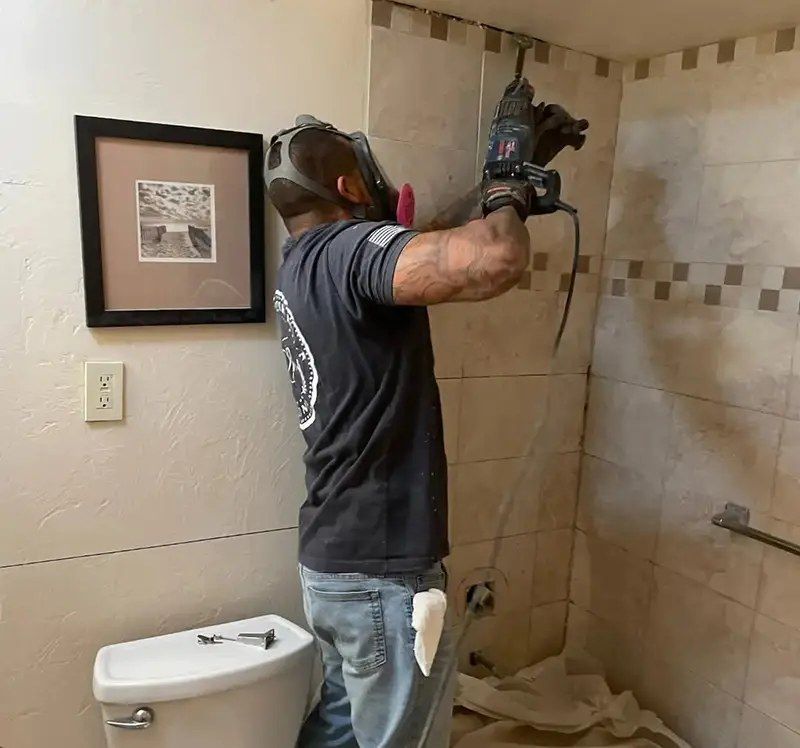
- Drywall: dried in place after a short soak, removed after a long soak or contact with contaminated water
- Insulation: removed once it is soaked or contaminated, since it holds on to water
- Hard flooring and subfloor: tested for moisture in the layers underneath before a decision is made
Whatever can be dried in place gets dried. Whatever cannot is taken out so the framing and subfloor behind it have a chance to dry. We explain what we find before we make the call. When you are deciding about a carpet, three questions matter most: what kind of water it was, how long it sat, and whether the backing, pad, and subfloor can be dried.
Hand Off to Structural Drying and Documentation
With the standing water gone, the work shifts. Moisture is still in the pad, drywall, subfloor, and framing, and that hidden moisture is what causes trouble weeks later. After extraction we take fresh readings in the materials around the affected area and decide what needs drying.
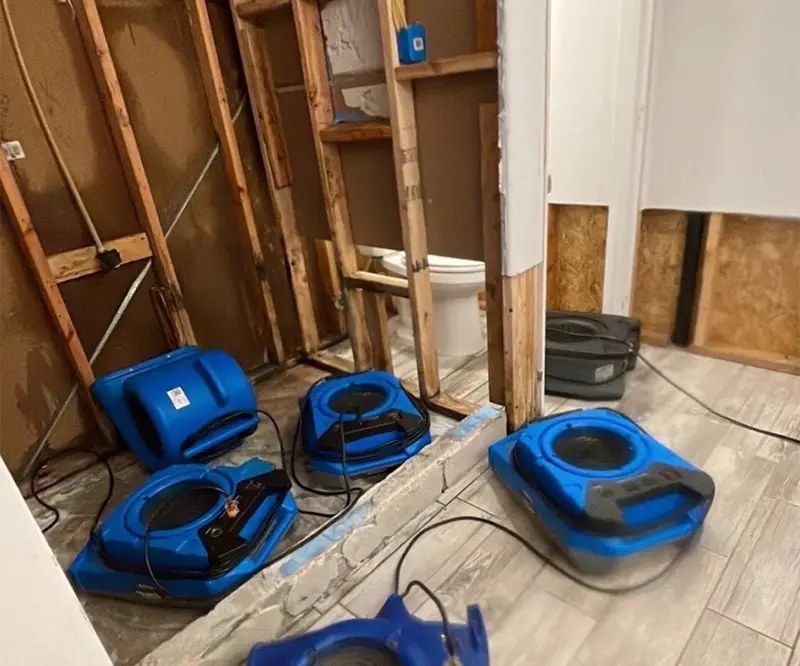
Next comes structural drying: air movers and dehumidifiers, plus moisture checks until materials read dry. Our dehumidification services keep humidity in the room under control, so moisture drawn out of materials does not settle back in. Expect drying to take days rather than hours, with the exact time set by the materials and conditions. Extraction also fits inside water mitigation, the emergency stage meant to keep a loss from growing. Mitigation wraps inspection, drying setup, monitoring, and documentation around the extraction.
Throughout, we keep records: photos, moisture readings, drying logs, and an itemized scope of the work. We work with all major insurance carriers, and we can talk with your adjuster about what we documented. When the water came from outside, such as a monsoon storm, flood damage restoration brings extra steps that suit that kind of loss.
Request Water Extraction for the Affected Rooms
If water is standing in your home or business, do not wait for it to drain or evaporate. Call Quick Restore of Tucson at (520) 488-6759 for water extraction in Tucson, AZ. We offer 24/7 emergency service, our office is on East Speedway in Tucson, and we serve homes and businesses across Greater Tucson.
At home, this often means kitchens, bathrooms, laundry rooms, garages, and slab-level living areas, plus condos, apartments, and rentals. At a business, the water is one problem and lost operating time is another. Tell us your hours and which areas must stay in use, and we will fit the extraction and drying around that where we can.
If the situation is not urgent and you would like us to look at the damage, request service and tell us where the water is, which rooms it reached, what caused it if you know, and anything that makes access unsafe. Not knowing is fine. The scope depends on what we find, and we walk you through it before work starts.