Dehumidification Services for Water Damage in Tucson, AZ
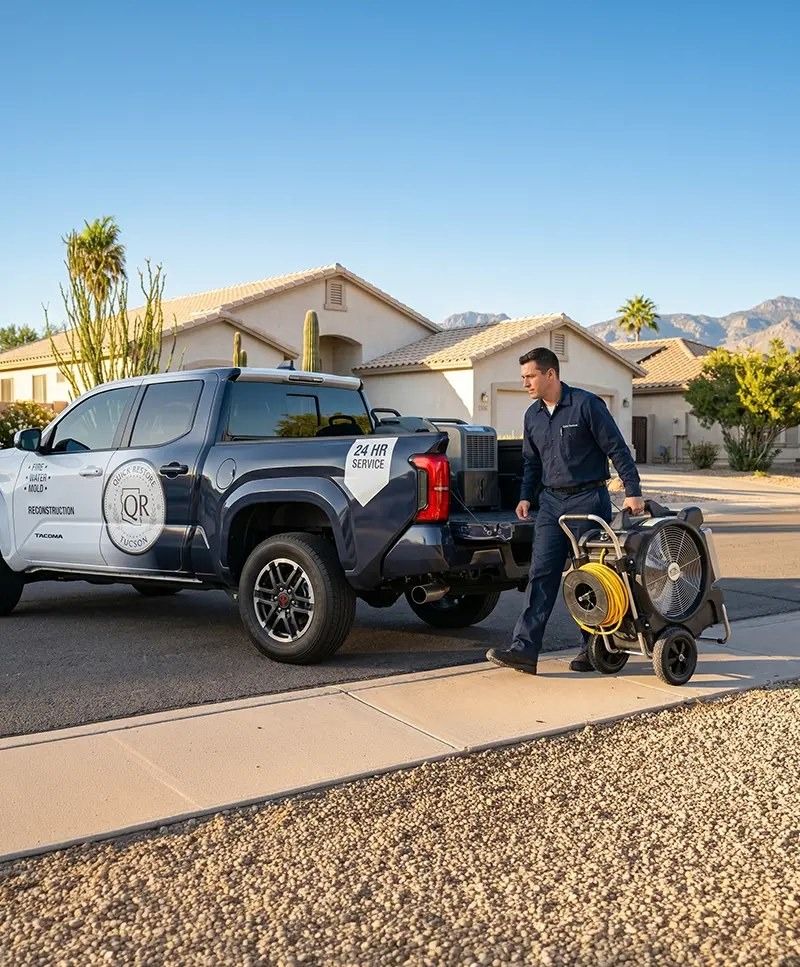
The water is gone, but the room still feels damp, or the floor and walls are still wet. That is the point where dehumidification helps. Quick Restore of Tucson provides dehumidification services in Tucson, AZ as part of water damage drying for homes and businesses, and we offer 24/7 emergency service.
Call (520) 488-6759 and tell us where the water came from, when the standing water was removed, and which rooms still feel damp. Every emergency reaches a live team member, day or night. We dispatch right away and give you a realistic arrival estimate.
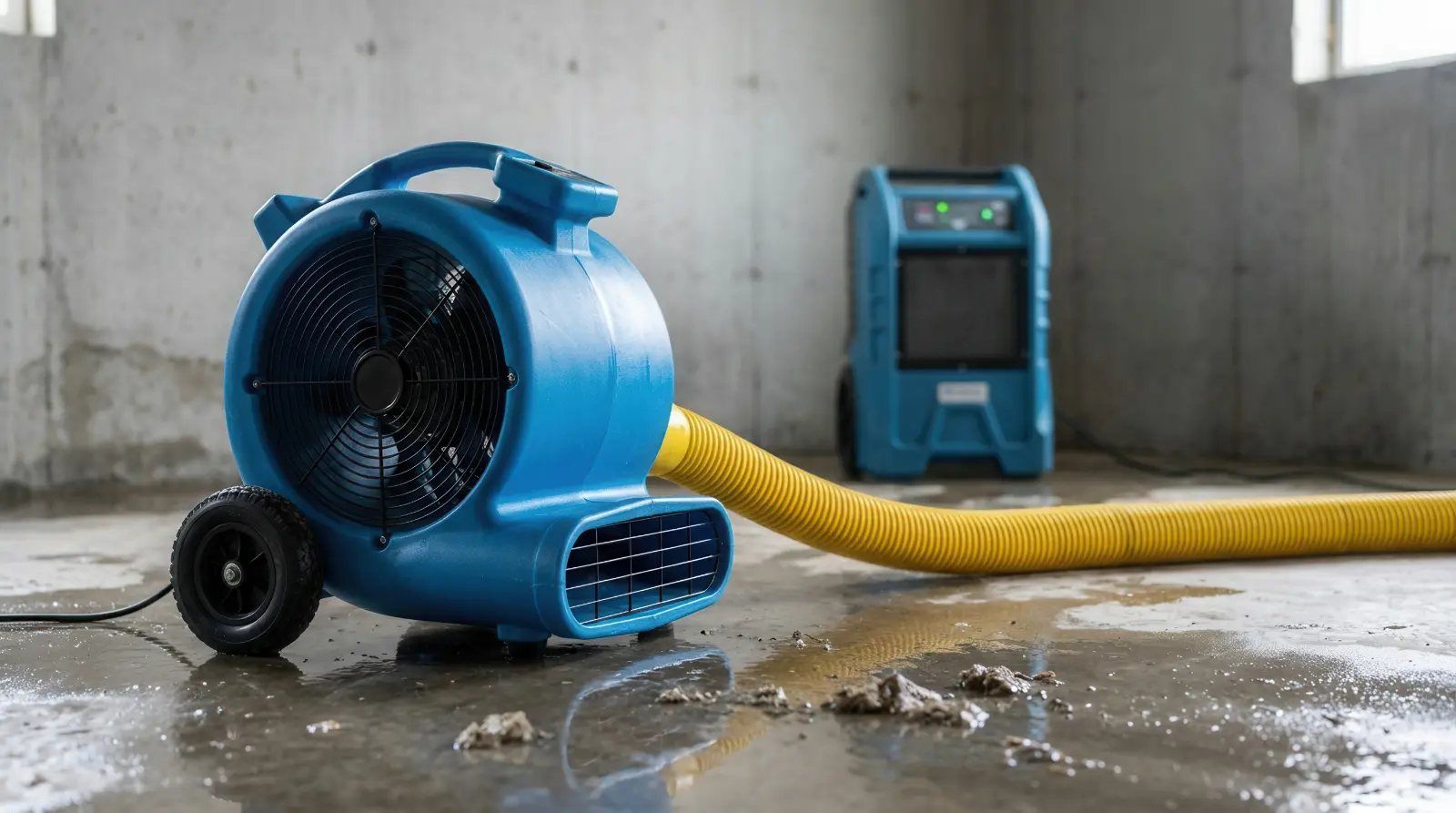
Dehumidification controls moisture in the air. It supports drying, because moisture leaving wet materials has to go somewhere, and humid air slows that process down. It does not take the place of removing the water or stopping the source, and it does not dry a wall or a subfloor by itself. The sections below explain where it fits and where it does not.
Start With the Water Source and Bulk Removal
Before any equipment is chosen, we want to know three things: where the water came from, whether it is still coming in, and whether pooled water is still on the floor. Those answers set the order of the work.
If water is still entering the property, drying equipment cannot get ahead of it. Stopping the source comes first. Repairing a leaking pipe or fixture is work for a licensed plumber. We deal with the water and the damage it caused. If you are not sure where the water is coming from, call us and tell us what you are seeing.
Standing water has to come out before humidity control makes sense. A dehumidifier does not remove a puddle, and it does not pull water out of carpet that is still soaked. Water extraction removes the pooled water first. Then we confirm which rooms are affected, so the plan covers the space that is actually wet instead of the whole building.
Match Humidity Control to the Wet Materials
One appliance in one corner is rarely the whole answer. We look at the room, the wet surfaces, the enclosed spaces, and the airflow, and then build the plan around them.
Here is what we consider:
- The size of the affected space and how much of it is wet
- What the wet materials are, since flooring, drywall, cabinets, and framing release moisture at different rates
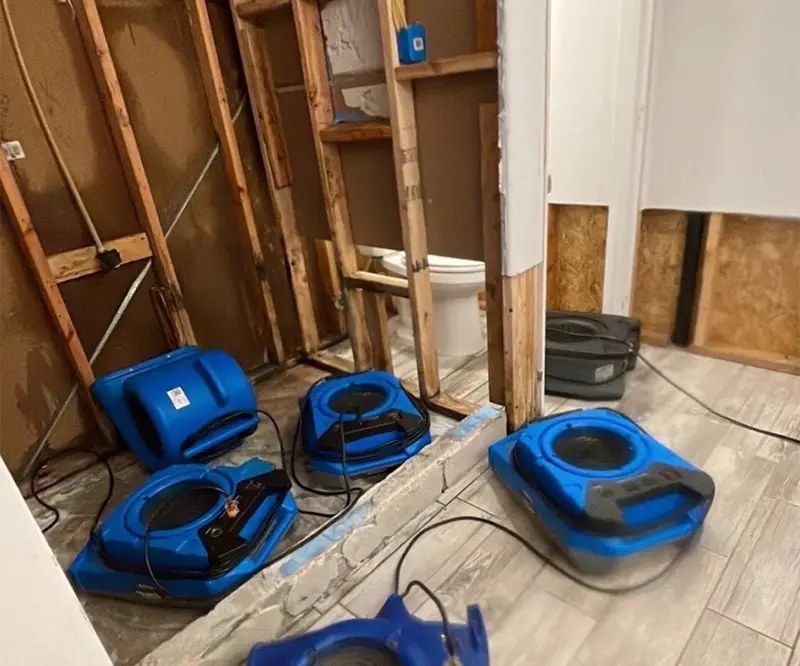
- Enclosed areas such as closets, wall cavities, and the space under cabinets, where air does not move on its own
- How air will move across the wet surfaces, because moving air helps pull moisture out of materials
- Whether doors, vents, or other openings affect the room
We do not prescribe a machine size or a number of units before we have seen the job. Equipment depends on the space and the materials, and a setup that suits a single wet bedroom would not suit a whole level of a business.
Greater Tucson's dry desert air can make a room feel fine while materials stay wet underneath. Many homes here are stucco, some adobe-style, on slab foundations, and moisture can sit in stucco walls and under flooring without much showing on the surface. Humidity control still helps, but it works alongside the drying of the materials, not instead of it. The wider plan is structural drying.
Measure Air Conditions and Material Moisture Separately
Two different things need to be measured, and they do not always agree.
The first is the air. Humidity readings tell us how much moisture the air in a room is holding. The second is the materials. Moisture meters tell us how wet the floors, the bottoms of walls, and the cabinets actually are. A room can feel comfortable and read well in the air while a wall or subfloor is still wet, so we do not treat one set of readings as proof of the other.
We record both. At the start we take baseline readings at identified points in the affected materials, along with air conditions in the room. On follow-up visits we read the same points, so the numbers can be compared from one visit to the next. A thermal camera can help us spot areas worth checking because it shows warmer and cooler areas on a surface, and we confirm with the meters before we call a material wet.
We keep this information in the job records, along with photos and notes about any change to the equipment. It is part of how we document the loss. We do not promise a humidity reading that clears a property, because no single reading does that.
Adjust the Plan When Humidity or Materials Are Not Improving
Sometimes the numbers stop moving. When humidity or material readings are flat, running the equipment longer is not always the answer. We check for a reason first.
These are the things we look at:
- Active water entry: a leak or a seep that has not been stopped adds moisture as fast as the equipment removes it
- Limited access: a closed cavity or a space behind cabinets may be holding moisture that the airflow cannot reach
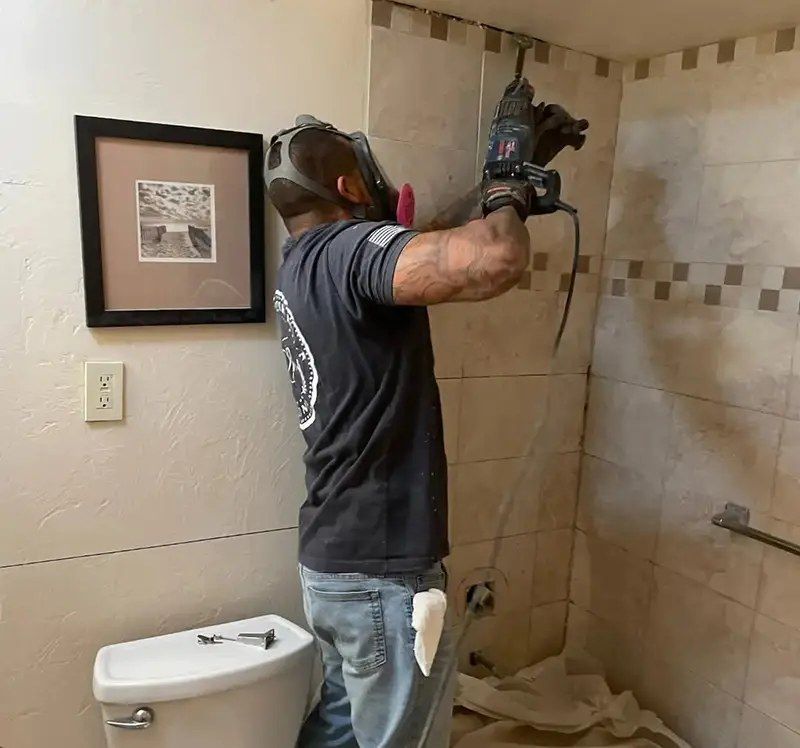
- Damaged materials: some materials will not dry in place and are better removed so the framing or subfloor behind them can dry
- Air movement: a closed door or a blocked vent can leave a corner of the room with still, damp air
This is a judgment based on several readings and what we can see, not a conclusion from a single number. When a cavity decision comes up, such as whether wet drywall can stay or needs to come out, we explain what we found and what we propose. Drying takes longer for some materials than others, and it can take days or longer. We adjust the plan as the readings change, and we tell you what we changed and why.
Finish With a Material-Based Handoff
The end of a drying job is not the moment the air feels dry. It is the moment the materials have been checked and the readings show they have dried. That is how we describe a finished job, and it is what we tell you when we wrap up.
We go through the areas we monitored and tell you what dried, whether any area is an exception, and what the condition of each material is. If materials had to be removed, we explain what that means for the next step. We are a licensed Arizona contractor (ROC 345010), and rebuilding comes after the drying is done. The overall plan for the materials is structural drying.
We document the loss with photos, moisture readings, drying records, and an itemized scope. We work with all major insurance carriers, and we can communicate with your adjuster about what we documented. Coverage decisions belong to your insurance company.
Request Dehumidification Services in Tucson, AZ
Call (520) 488-6759 and tell us what you are dealing with. The details that help us most:
- Where the water came from
- When the standing water was removed, if it has been
- Which rooms still feel damp
- Which materials are affected, such as flooring, drywall, or cabinets
We assess the space and decide on the plan after we see it. We serve homes and businesses across Greater Tucson, and we are available 24/7, 365 days a year. Every emergency reaches a live team member, day or night.