Structural Drying for Water-Damaged Materials in Tucson, AZ
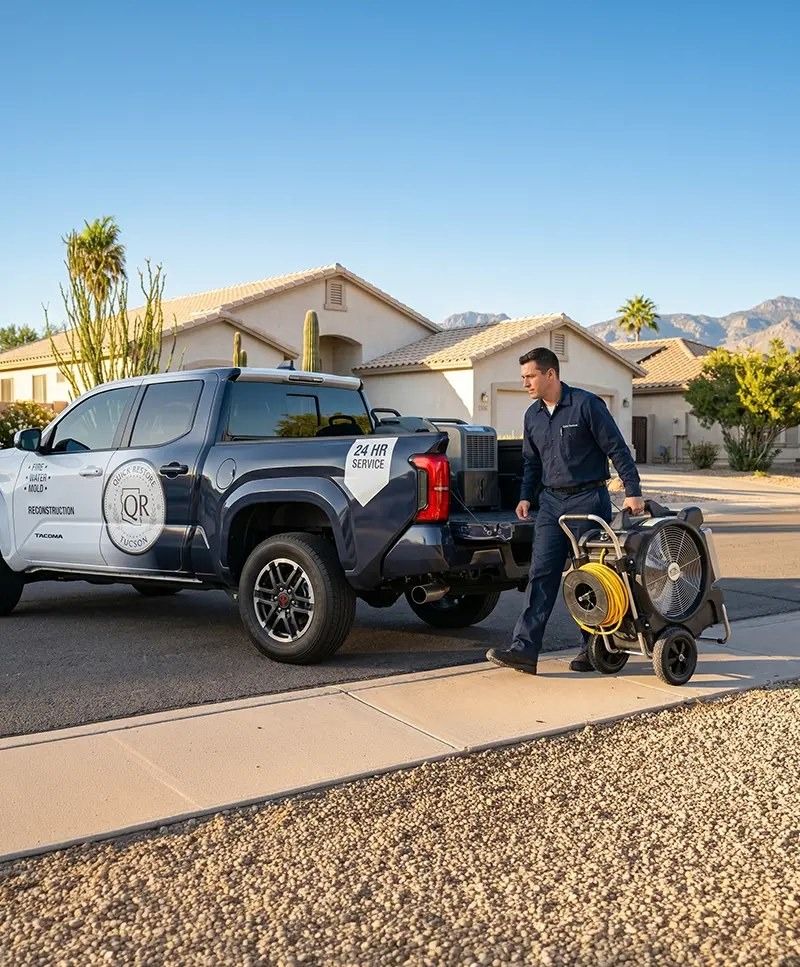
A floor can look dry and still be wet underneath. After the standing water is gone, the water that soaked into subfloors, the bottoms of walls, cabinet bases, and framing is still there. That moisture is what structural drying is for. Quick Restore of Tucson provides structural drying in Tucson, AZ for homes and businesses, and we offer 24/7 emergency service.
Call (520) 488-6759 and tell us what happened, which rooms are wet, and whether water got into the flooring or the walls. Every emergency reaches a live team member, day or night. We dispatch right away and give you a realistic arrival estimate.
Here is how we think about it. Extraction removes the liquid water you can see. Drying deals with the water held inside the materials your building is made of. Wet materials can take days, and sometimes weeks, to dry, and how a room looks is a poor guide. In the dry desert air of Greater Tucson, a surface can feel dry while the layer beneath it stays wet. That is why our drying work is built around measurements instead of appearance. If standing water is still present, water extraction comes first, and the sections below explain what follows it.
Identify Which Assemblies Are Wet
An assembly is a set of layers built together, such as a floor made of finish, underlayment, and subfloor, or a wall made of paint, drywall, insulation, and framing. Water rarely stays in the layer you can see, so we assess room by room instead of guessing from a stain.
We start by asking about the source, when the water started, and where it traveled. Then we check the places water is most likely to have reached:
- Flooring and the subfloor underneath it
- Baseboards and the bottoms of drywall
- Cabinet bases and toe kicks
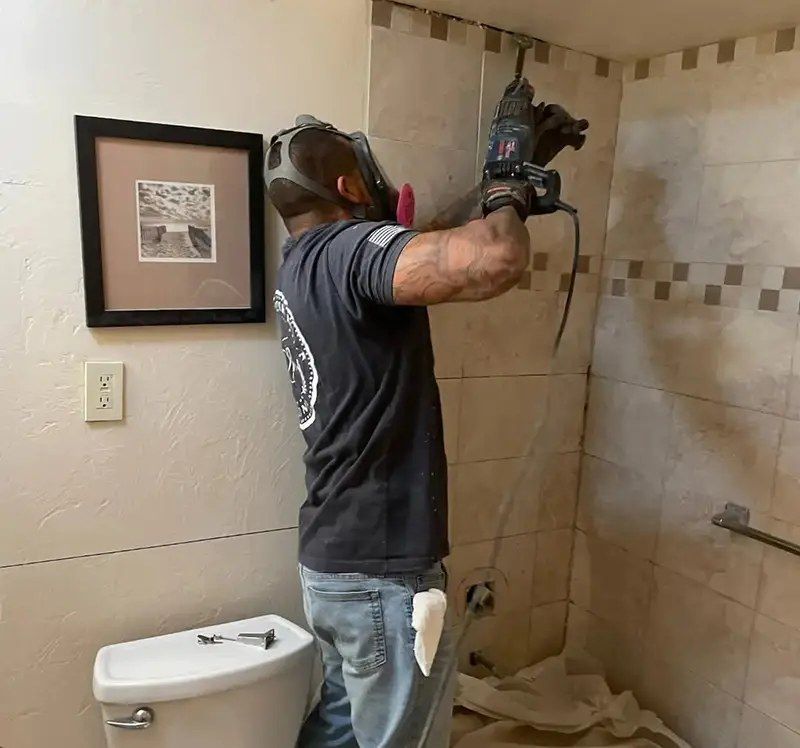
- Wall cavities we can reach through outlets, a removed baseboard, or another access point
- Neighboring rooms the water may have crossed into
We use moisture meters and thermal imaging. A thermal camera shows warmer and cooler areas on a surface, which can point to a spot worth checking. It does not show water by itself, so we confirm with the meters before we call anything wet. We record the readings by location. They become the baseline for the job and give us something to compare against on every follow-up visit.
A visible stain is a lead, not the full picture. Water can travel well past a stain, and a wet area can show no stain at all. Many Greater Tucson homes are stucco, some adobe-style, built on slab foundations. Water can move into stucco walls and under flooring on a slab without much showing on the surface. We do not open every cavity on every job. We access the areas that the readings and the story of the loss point to, and we tell you why.
Set a Drying Plan After Bulk Water Is Removed
A drying plan only works once the source is under control and the bulk water is out. If a pipe is still leaking or water is still coming in, drying equipment is working against a losing battle. Repairing a failed pipe or fixture is work for a licensed plumber. We deal with the water and the damage it caused. When pooled water is part of the loss, we remove it first through water extraction.
Once the source is stopped and the standing water is out, we build the plan from what the readings showed. A typical job goes like this:
- We confirm the source is controlled and the standing water is removed.
- We set the boundaries of the wet area from the readings and the loss history.
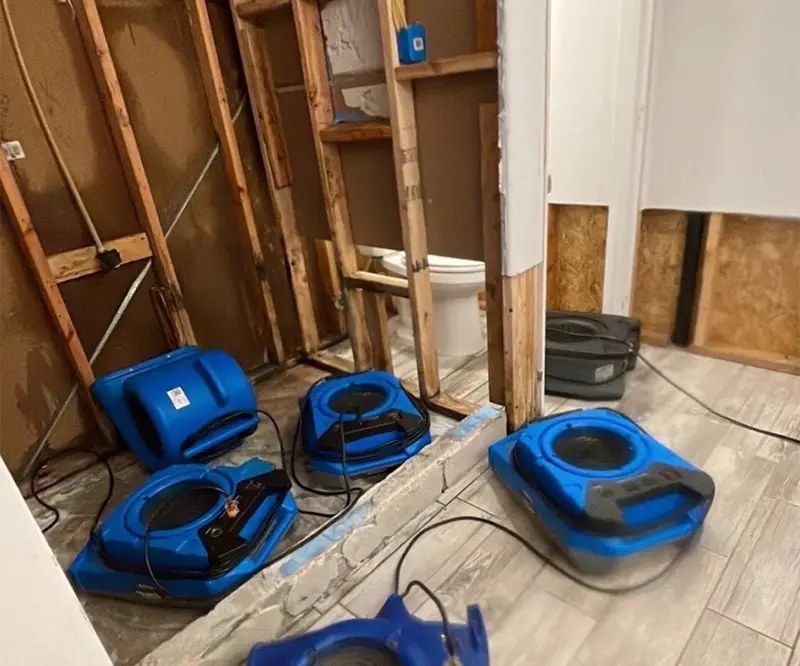
- We decide how to move air across the wet surfaces and how to control humidity in the space.
- We set up equipment for the rooms and materials involved.
- We take baseline readings and record them before we leave.
Moving air helps release moisture from materials, and humidity control keeps that moisture from settling back in. That is where dehumidification services fit into the plan. We choose equipment for the job in front of us. We do not promise a standard setup, because no two losses are alike.
We also tell you what we need from you. We need access to the affected rooms, and sometimes to closets, cabinets, or furniture along an exterior wall. Equipment will be running in your space, so we explain what is running, which areas to keep clear, and what not to unplug. Whether you are a homeowner or manage a business, we keep the people who use the space informed about what happens next.
Monitor Materials and Adjust the Plan
Drying is not a set-it-and-wait job. We measure, then we measure again.
At the start we take baseline readings at identified locations in the affected materials. On each follow-up visit we read the same locations, so the numbers can be compared. We keep a record of what we find, along with photos and notes about any change to the setup. Those drying records are part of how we document the loss.
The readings tell us what to do next:
- Readings dropping as expected: the plan stays in place.
- Readings flat in one area: we look for a reason, such as a closed cavity, a material that holds water, or moisture still getting in.
- A material that is not responding: we reassess whether it can be dried in place or has to come out.
We do not use a standard drying time or a single moisture number for every material, because there is no such number. Materials dry at different speeds, and the same material dries differently in a closed room than in an open one. Dry air outside does not mean a wall cavity is dry, and a room that feels comfortable can still hold a wet assembly. We keep checking the materials until the readings show they have dried, and we tell you what we saw when we reached that point.
Choose Drying or Removal by Material Condition
Structural drying is not a promise to save everything. We decide material by material.
Sound, accessible materials can often be dried in place. Materials that are damaged, trapped, or contaminated may have to come out. What decides it:
- The water source: clean water from a supply line is different from a sewage backup or contaminated floodwater.
- How long the material stayed wet.
- What the material is made of, since some materials hold far more water than others.
- Whether we can reach the moisture, such as water trapped inside a closed cavity.
Wet insulation holds water, and it often has to be removed so the framing behind it can dry. Drywall that soaked for a long time, or that met sewage, is commonly removed. Drywall that stayed wet briefly with clean water can sometimes be dried in place. Subfloors and framing are usually dried rather than removed. Materials contaminated by sewage generally cannot be cleaned safely, which is why a sewage loss is handled differently from a clean-water loss.
We tell you what we find before we decide, and we separate what we propose to dry from what we propose to take out. We do not promise that any material can be saved until we have inspected it. If something has to come out, we explain why and what it means for the drying and for the rebuild that follows.
Close With a Clear Reconstruction Handoff
A drying job should end with a clear picture, not just a quiet room. When the work is winding down, we go back through the areas we assessed and compare the final readings with the baseline. We tell you what has dried and which areas, if any, are exceptions that still need attention.
Where materials were removed, the next step is putting the area back together. We are a licensed Arizona contractor (ROC 345010), and we explain what was taken out, what was left in place, and what the area needs before it can be rebuilt.
We document the loss with photos, moisture readings, drying records, and an itemized scope. We work with all major insurance carriers, and we can communicate with your adjuster about what we documented. Coverage and claim decisions belong to your insurance company, and we do not promise any particular report or outcome.
Request Structural Drying in Tucson, AZ
Call (520) 488-6759 and tell us what happened. These details help us most:
- What the water event was and when it started
- Which rooms and materials are affected
- Whether the standing water has been removed
- Any area you cannot get into, such as a closed cavity or the space under cabinets
A site assessment decides the drying and removal scope, because a phone call cannot. We serve homes and businesses across Greater Tucson, and we are available 24/7, 365 days a year. Every emergency reaches a live team member, day or night.