
Water Damage Restoration After Leaks and Floods in Tucson, AZ
When water damages your home or business, the first priority is stopping the spread, removing standing water, and starting controlled drying before the damage gets worse. Quick Restore of Tucson provides water damage restoration in Tucson, AZ for burst and frozen pipes, water line breaks, water heater leaks, overflows, fire sprinkler water, flooding, and storm water. Our team inspects the affected areas, begins water mitigation, documents the damage, and builds a restoration plan for your property.
We offer 24/7 emergency service. Every emergency reaches a live team member, day or night. Call (520) 488-6759 and tell us three things: where the water is, whether it is still coming in, and whether you can reach the area safely. Those answers decide what we bring and what has to happen first. We dispatch right away and give you a realistic arrival estimate on the phone.
Emergency work covers active leaks, standing water, saturated flooring, wet drywall, and ceiling leaks. One thing to know up front: dealing with the water and the damage it caused is our work, but repairing a failed pipe or a roof is the job of the right licensed trade. If you can do it safely, shut off the water supply while you wait for us.
What Water Damage Restoration Includes
Water damage restoration is the full process of inspecting water-damaged areas, removing the water, drying affected materials, cleaning what needs cleaning, and preparing the property for repair or rebuild. The goal is to stop the damage from spreading into places you cannot see.
On a typical job, our work can include:
- Inspection and moisture detection, so we know how far the water traveled
- Water extraction to remove standing water from floors, carpet, and affected rooms
- Water mitigation, the emergency stage that keeps damage from spreading
- Structural drying and dehumidification
- Cleaning of affected areas, based on the type of water involved
- Documentation of the loss with photos, moisture readings, and drying records
- A handoff to repair and rebuild once the structure is dry
Water damage cleanup, water damage repair, and water restoration overlap, but they are not the same thing. Cleanup is the removal and cleaning work. Restoration adds drying, monitoring, and a plan for what comes next. Repair is the rebuild of materials that were removed or could not be saved, and it follows drying. We tell you which stage we are in and what comes after it.
Common Water Damage Problems
Water gets into buildings in many ways, and the cause shapes the plan. These are the four situations we see most.
Burst Pipes, Frozen Pipes, and Water Line Breaks
Burst and frozen pipes, broken supply lines, and a break in the main water line all put clean water into a structure. A burst line releases a lot of water quickly, and it spreads into walls, floors, and cabinets before the supply can be shut off.
We remove the water, dry the affected materials, and document what we find. If you cannot tell where the water is coming from, we arrange water leak detection through a partner to locate it. We do not repair the pipe itself. A licensed plumber does that, and we work around the plumber so drying can start.
Water Heater Leaks, Overflows, and Sprinkler Water
Water heater leaks and toilet, bathtub, sink, and shower overflows are everyday causes of water damage. A fire sprinkler that discharges can put a lot of water into a room in minutes. A tank or an overflow that lets go while no one is home can soak a wide area before anyone notices.
The type of water matters. Supply-line water is clean when it starts, but a drain overflow can carry soap and residue, and water that sat in sprinkler pipes is not clean water. We ask what failed and how long it has been leaking before we decide how to clean and what to dry or remove.
Flooding and Storm Water
Heavy rain and water coming in from outside count as flooding, including water in a basement or crawl space where a property has one. Greater Tucson's monsoon season, roughly mid-June through September, brings sudden heavy storms, and flash flooding and storm runoff are a common cause of water damage here. Water that enters from outside carries soil and debris, so it is handled differently from a pipe leak.
We cover this in detail on our flood damage restoration page. In short, the first steps are safe access, removing the water, and deciding which materials can be dried and which cannot.
The Water Mitigation and Restoration Process
Every job is different, but our process follows the same order. We assess first, remove the water, handle contamination if there is any, dry the structure, and then plan the cleaning and repair.
Inspection and Moisture Mapping
We start by finding where the water went. We look at the visible damage, then check what you cannot see. Moisture meters tell us whether materials are actually wet, and a thermal camera shows differences in surface heat that can point us toward hidden moisture. The camera does not show water by itself, so we confirm what it suggests with the meters.
We record readings room by room. That record becomes our map of where the water traveled, and we compare against it as drying progresses. We also look for safety hazards, including electrical concerns around standing water, and tell you what has to be handled first.
Water Extraction
Standing water is removed first because it keeps soaking into flooring, drywall, and framing while it sits. We use pumps for deeper water and extraction equipment for carpet and hard floors. Removal covers affected rooms, carpet, and any other areas the water reached.
Extraction is the bulk-water step, not the whole job. After the pooled water is gone, we check what is still wet. Our water extraction page has the full process.
The order depends on the type of water. When the water is contaminated, we deal with the contamination and the materials it reached before restorative drying begins. When the water is clean, drying follows the assessment.
Drying, Dehumidification, and Monitoring
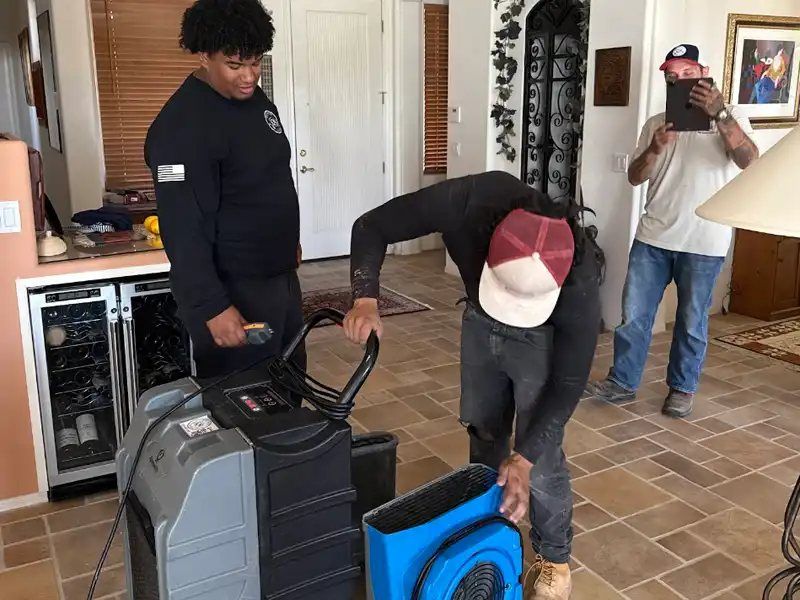
Drying uses air movers to push air across wet surfaces and dehumidifiers to pull moisture out of the air so it does not settle back into the structure. We set up equipment based on what the readings show, then return to check progress.
Monitoring is the part many people do not expect. We take moisture readings again over the following days and adjust the setup until materials read dry. Our structural drying and dehumidification services pages explain the equipment and monitoring in more detail.
Cleaning, Sanitizing, and Restoration Planning
Once the structure is drying or dry, we handle the remaining cleaning. How we clean depends on the type of water and the material. Sanitizing is not a substitute for physically cleaning and drying a surface, so cleaning comes first and any disinfecting is part of that work, not a shortcut around it. When contamination was involved, that work has already been addressed before this step.
Some materials will have been removed and will need to be rebuilt. We are a licensed Arizona contractor (ROC 345010), and our reconstruction services page explains how we approach rebuilding after damage. The repair scope comes after the structure has been assessed and dried.
Structural Drying and Moisture Control
Drying is not just removing visible water. Moisture can stay in drywall, insulation, subfloors, cabinets, trim, carpet pad, and framing long after the surface feels dry. If it stays there, it can lead to swelling, warped floors, odors, and mold growth.
Many Greater Tucson homes are stucco, and some are adobe-style, on slab foundations. Water can move into stucco walls and under flooring on a slab, and the dry desert air can make surfaces look dry while materials underneath stay wet. That is why we measure with moisture meters instead of trusting appearance.
Our drying plan sets goals and checks progress against them. We take readings, adjust the equipment, take readings again, and keep a record. That record shows when materials have reached a dry condition and gives you documentation of the work. Our structural drying page covers the process in full.
Wall, Floor, and Cabinet Drying
Whether a wet material can be dried in place depends on what it is, the water category, and how long it stayed wet. Wall cavities, floors over a slab, and cabinet bases are places where water hides, so we check them even when they look fine.
Materials that can be dried in place are dried. Materials that cannot are taken out so the framing or subfloor behind them can dry. Drywall that has soaked for a long time, or met contaminated water, usually has to be removed. We inspect first and tell you what we find. We do not promise that any material can be saved before we have looked at it.
Category 1, Category 2, and Category 3 Water Damage
Restoration professionals sort water into three categories based on how contaminated it is. The category is decided by the source and the conditions we find on site, not by the weather alone. The category affects what gets cleaned, what gets removed, and what protective equipment we use.
Category 1 Water
Category 1 water comes from a clean source, such as a broken supply line or a sink or tub overflow with no contaminants in it. This is the least complicated type of loss.
Conditions can change, though. Clean water that sits for a long time, or that passes through dirty materials, can become contaminated. That is one more reason to call early.
Category 2 Water
Category 2 water, sometimes called gray water, may carry some contamination. Common sources are washing machine or dishwasher discharge and some toilet overflows that do not involve waste.
Category 2 losses call for more careful cleaning and more careful decisions about materials. Porous items such as carpet pad and soaked drywall are looked at closely, since they are harder to clean.
Category 3 Water
Category 3 water is grossly contaminated. It includes sewage and water carrying waste or other harmful material, and it can include contaminated floodwater that came in from outside. Wind-driven rain is not automatically Category 3. The source and the conditions on site have to be assessed.
Category 3 work uses protective equipment, careful removal decisions, and thorough cleaning. Porous materials that sewage or contaminated floodwater reached often cannot be cleaned and have to be removed. This page is general information about water categories. It is not legal or health advice.
Water Damage, Mold Risk, and Indoor Air Concerns
Mold can develop when moisture stays in materials. Controlling moisture is the main way to reduce that risk. The longer wet drywall, carpet pad, or framing stays wet, the more likely it is that growth will start. We cannot promise that mold will not appear, but prompt drying lowers the odds.
If you see visible mold, or suspect growth behind a wall or under flooring, that is a separate step. Mold is assessed and handled through our mold remediation work, which covers containment and removal. Tell us if you have seen or smelled anything that looks like mold when you call, and we will plan the water work with that in mind.
Water Damage Restoration Considerations by Property Type
Homes and businesses use the same process, but the questions that shape the job are different.
Homes, Condos, Apartments, and Rental Properties
For a house, a condo, or an apartment, the questions are usually about which rooms are affected, whether anyone can stay in the home, and what belongs to the owner versus the building. Homeowners, landlords, tenants, and property managers all call us, and each has a different part to play.
In a condo or multifamily building, water often travels between units, so we check the areas around the visible damage too.
Commercial Buildings and Facilities
For offices, retail spaces, restaurants, warehouses, and multifamily and managed properties, water damage is a problem and downtime is another. Documentation, containment, and scheduling matter more because the building has to keep working or get back to work.
Tell us your operating hours and which areas have to stay in use, and we will plan around that where we can. Our commercial restoration services page has more on how we approach commercial properties.
Insurance Documentation for Water Damage Restoration
We document the loss as we work. That means photos of the affected areas, moisture readings, drying records, and an itemized scope of the work. Many property owners use these records when they talk with their insurance company, and we can communicate with your adjuster about what we documented.
We work with all major insurance carriers. Whether a loss is covered, and how much a policy pays, is a decision between you and your insurer, and we cannot tell you how a claim will turn out. Before work begins, ask your insurer what records it needs and what your policy covers.
While you wait for us, take photos of the damage before anything is moved and note when the water started. Our insurance claims process page explains how we fit into the process step by step.
Call Quick Restore of Tucson for Water Damage Restoration in Tucson, AZ
If water is spreading through your property, do not wait for visible damage to dry on its own. Call Quick Restore of Tucson at (520) 488-6759 for water damage restoration in Tucson, AZ. We can inspect the damage, remove water, start drying, and help you understand the next steps for cleanup, documentation, and repairs.
We are a local team based in Tucson, and we serve homes and businesses across Greater Tucson. We offer 24/7 emergency service, and every emergency reaches a live team member, day or night. We are an IICRC Certified Firm and a licensed Arizona contractor (ROC 345010). You can read what our customers say on our reviews page.
If it is not an emergency and you want us to look at the damage, you can request service. Tell us where the water is, which rooms are affected, and anything that makes access unsafe. We explain the scope before work begins.