
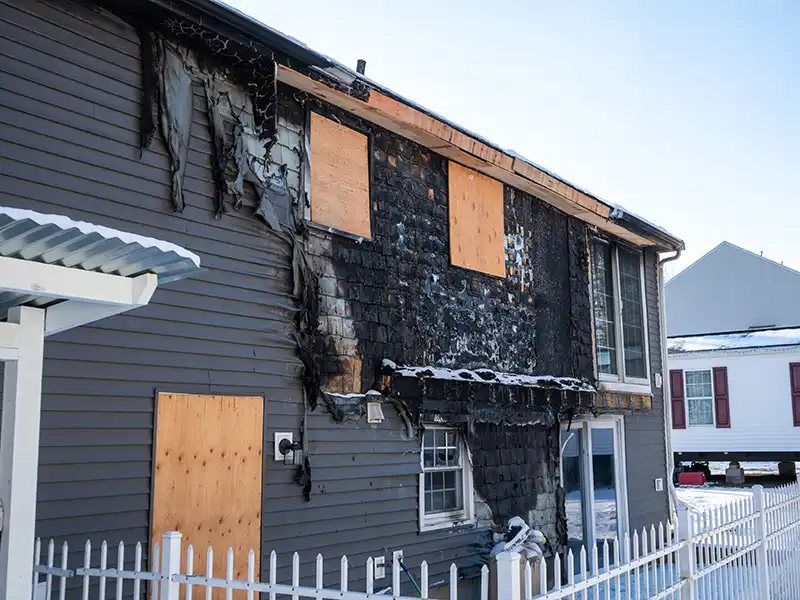
Fire Damage Restoration After a Property Fire in Tucson, AZ
After a fire, a property can be left with soot, smoke residue, ash, odor, water from firefighting, and openings that are no longer secure. Quick Restore of Tucson provides fire damage restoration in Tucson, AZ for homes and businesses. We take you from the first assessment through cleanup, smoke and soot restoration, odor work, drying, documentation, and rebuild planning.
Call (520) 488-6759 once the fire department says the property is safe to enter. We offer 24/7 emergency service, and every emergency reaches a live team member, day or night. We dispatch right away and give you a realistic arrival estimate. When it is safe, we inspect the damage, explain what we found in plain terms, and lay out the order of the work.
Do not go into a fire-damaged building until the fire department says it is safe. If you are not sure whether it is cleared, wait for an answer from the fire department or the utility company, then call us.
What Fire Damage Restoration Includes
Fire damage restoration is a series of connected steps, not one task. What your property needs depends on how far the fire, the smoke, and the water spread. A typical job can include:
- Stabilizing the property so weather and unauthorized entry do not add to the damage
- Cleaning ash and fire residue, and removing materials that cannot be cleaned
- Cleaning smoke and soot from walls, ceilings, floors, and other surfaces
- Removing the sources of smoke odor
- Drying water left behind by firefighting
- Documenting the loss with photos, notes, and an itemized scope
- Planning repairs and rebuilding
The sections below explain each part, and which parts apply to you depends on what we find. Smoke and soot have their own page on smoke damage restoration. Water left by firefighting falls under our water damage restoration work. Rebuilding is a separate stage, and our reconstruction services explain how that works. Quick Restore of Tucson is an IICRC Certified Firm.
Emergency Board-Up and Property Stabilization
A fire often leaves a property open. Windows break from the heat or are removed by firefighters. Doors get forced. Part of a roof or wall may be burned through. Those openings let in rain, wind, dust, and people who have no reason to be there, and every day an opening stays unsecured, more damage can follow.
Property stabilization means closing those openings temporarily. Board-up covers broken windows, doors, and wall openings. A burned or damaged roof goes to a roofing contractor. Board-up is a short-term measure. It reduces weather exposure and the risk of unauthorized entry while cleanup and permanent repairs are planned, and it is not a repair. In Greater Tucson, that matters most during monsoon season, roughly mid-June through September, when a sudden storm can send rain through an open roof within minutes.
Stabilization depends on safety. A fire-damaged structure can have weakened floors, damaged roofing, or hazards that are not obvious from outside. Securing a property should start only after the fire department has cleared it and the work can be done safely. Once it can, we board up the broken windows, doors, and wall openings.
When you call us, describe what is open: which windows, doors, or sections of roof or wall. That lets us talk through what needs attention first and how it fits with cleanup and drying. If your insurer asks what you did to limit further damage, keep photos of the openings and any receipts.
Fire Damage Cleanup and Debris Removal
Once the property is safe, cleanup starts with ash, residue, and the materials the fire damaged beyond saving. We work to keep soot from being tracked into rooms the fire did not reach. If a fire extinguisher was used, we clean up the residue it left as part of the same work.
Materials that are burned through, or soaked and contaminated beyond saving, come out according to the scope we agree on with you. Materials that can be cleaned are cleaned, with the method matched to the surface. We assess each one instead of deciding in advance what can stay.
A few things are worth avoiding before we arrive:
- Do not wipe or scrub soot-covered surfaces. Rubbing can push residue deeper into the material.
- Do not use household cleaners or odor sprays on walls, ceilings, or fabrics.
- Do not turn on appliances, electronics, or the HVAC system if they were exposed to the fire.
- Do not eat food that was exposed to heat or smoke.
Call before you start cleaning. A surface that looks easy to wipe can be harder to restore if it is cleaned the wrong way first.
Smoke Damage Restoration and Soot Cleaning
Smoke does not stay where the fire was. It moves through a building with air currents and settles on whatever it reaches. Our smoke damage restoration work cleans soot and smoke residue from the structure and deals with what holds the smell.
Smoke Residue on Walls, Ceilings, and Contents
Smoke can travel well past the room where the fire started. Soot settles on walls and ceilings, inside closets and cabinets, along the tops of door frames, and on furniture in nearby rooms. The residue can look different from one surface to the next: dry and powdery in one place, sticky or smeared in another.
The right cleaning method depends on the material, the type of residue, and how heavy it is. Painted walls, sealed wood, unfinished wood, fabric, and glass do not respond to the same approach. We try a method on a small area first, then check the result before we use it on a whole surface.
Belongings in affected rooms hold smoke too, including clothing, bedding, and furniture. We note their condition so your records are complete.
HVAC, Airflow, and Cross-Contamination Concerns
Air systems can spread smoke. If the heating or cooling system ran during or after the fire, soot and smoke odor may have moved through the vents and returns into rooms far from the fire. Running a system that was exposed to smoke can carry residue even further. Leave it off until a qualified HVAC professional has looked at it.
We look at how the smoke traveled, including rooms that share air paths with the burn area, so the cleaning plan covers more than the room that burned. If the air handling looks affected, we tell you, so you can have the system inspected before you use it again.
Smoke Odor Removal After a Fire
Smoke odor is not a surface problem you can cover up. It comes from residue and from materials that absorbed smoke, so removing the odor starts with removing what holds it. In practice, that means cleaning soot from surfaces first, then dealing with the porous materials that took in smoke: carpet and pad, insulation, upholstery, mattresses, and the inside of cabinets.
Some materials can be cleaned well enough that the odor fades. Others have soaked up too much smoke, and they are better removed and replaced, because cleaning the surface will not reach what is inside. We work out which is which by inspection. We do not promise that every odor will go away, because that depends on how long the smoke sat, how deep it went, and what the materials are.
Air fresheners and household sprays hide odor for a short time and can interfere with cleaning, so skip them. Odor work is part of our smoke damage restoration, and the same inspection that guides the cleaning guides the odor decisions.
Water Damage From Firefighting
Putting out a fire takes a lot of water. It soaks floors, runs down walls, drips through ceilings, and collects in cabinets and insulation, and rooms far from the fire can end up wet. Water damage after a fire is easy to overlook because attention goes to the burned areas, but it keeps doing damage for as long as materials stay wet.
We check for it as part of fire damage restoration. We use moisture meters and thermal imaging to find water in materials. Dry desert air can make a surface look dry while the material under it is still wet. Many Greater Tucson homes are stucco on slab foundations, and water can move into stucco walls and under flooring where nobody sees it.
Firefighting water can also carry soot, ash, and debris, depending on the site, so we handle wet materials with that in mind. Drying uses air movers and dehumidifiers, and it continues with moisture readings until the materials are dry. Our water damage restoration and structural drying work cover those steps in detail. Wet materials left in place can lead to mold, which is one more reason not to wait.
Fire Restoration Process: From Inspection to Repairs
Every fire is different, but the work usually follows the same order. Here is what to expect.
Damage Assessment and Safety Review
We start once the property is safe to enter. We walk the affected areas and the rooms around them, and we document what we see: visible fire and heat damage, where smoke traveled, where water went, and what is in the affected rooms. We take photos and notes, and moisture readings wherever water was used.
You get a plain explanation of what we found and a scope for the work. Whether a building is safe to occupy is not our call. That belongs to the fire department, building officials, and qualified professionals, and anything structural gets referred to them.
Stabilization and Cleanup
If openings are letting weather in, stabilization comes first, as described above. Cleanup follows: removing ash, residue, and materials that cannot be saved, drying wet areas, and setting up barriers so soot is not carried into clean rooms. Then we put together the cleaning plan for the surfaces that remain.
Smoke, Soot, and Odor Treatment
This is the cleaning stage. We clean soot and smoke residue with methods matched to each material, remove the sources of odor, and decide with you what happens to materials that cleaning will not fix. We check the results as we go. If a surface still shows residue or odor after cleaning, it gets another look, and sometimes the answer is replacement rather than a second round of cleaning.
Repair and Reconstruction Planning
Restoration brings a property to a clean, dry condition that can be worked on. Repairs and rebuilding come after that. When damage goes past cleaning, such as burned framing or finishes that have to be replaced, we move into rebuild planning. We are a licensed Arizona contractor (ROC 345010), and our reconstruction services cover rebuilding after damage. The scope comes from the assessment, and local building requirements can affect what the work involves.
Residential and Commercial Fire Damage Restoration in Tucson, AZ
We respond to fire losses at homes and at businesses from our office on East Speedway in Tucson. The towns we serve are listed on our service area page.
Homes, Apartments, Condos, and Rental Properties
After a fire at home, you are dealing with a lot at once: where to stay, what can be saved, and what your insurer needs. We keep the restoration side simple. We explain the damage in plain terms, give you a written scope, and tell you what happens next.
For landlords and property managers, we document each unit and each affected common area separately, so owners, tenants, and insurers can all work from the same record. In apartments and condos, smoke can travel between units through shared walls, ceilings, and air paths, so neighboring units may need to be checked even when the fire never reached them.
Commercial Buildings and Businesses
A fire at a business is also a problem of lost time. We work with owners and property managers of offices, retail spaces, restaurants, warehouses, and multifamily and managed properties. We focus on safety, clear documentation, and a plan that can be done in phases, so the parts of a building that can come back into use sooner are not held up by the parts that cannot.
Tell us the use and size of the building when you call, and we will talk honestly about what the work involves. Our commercial restoration services page covers business losses in more detail.
Insurance Documentation for Fire Damage Restoration
Whether your policy covers a fire loss depends on the policy and the cause of the loss, and your insurer makes that decision. What we can do is document the damage so the claim review has facts to work from.
We document the loss with photos of damaged rooms, notes on smoke and soot conditions, moisture readings where firefighting water spread, and an itemized scope of work. We work with all major insurance carriers, and we can communicate with your adjuster about what we documented.
You can help in a few ways:
- Call your insurer promptly and ask what records it needs
- Photograph what you can see safely before anything is moved
- Keep receipts for emergency expenses
- Ask your insurer before you discard damaged items, unless they are unsafe to keep
Our guide to the insurance claims process walks through the steps from the first call.
Call Quick Restore of Tucson for Fire Damage Restoration in Tucson, AZ
If your property has fire, smoke, soot, odor, or water damage, call Quick Restore of Tucson at (520) 488-6759. We offer 24/7 emergency service, and every emergency reaches a live team member, day or night. We dispatch right away and give you a realistic arrival estimate.
When it is safe to enter, we inspect the affected areas, explain the damage and the order of the work, document the loss, and plan cleanup, smoke and soot restoration, odor work, drying, and repairs with you.
If it is not an emergency, you can request service and tell us what happened, which rooms were affected, and whether the fire department has cleared the property. Our office is on East Speedway in Tucson, and we serve Greater Tucson.