
Storm Damage Restoration After Wind, Water, and Debris in Tucson, AZ
Greater Tucson's monsoon season, roughly mid-June through September, brings sudden heavy storms, strong wind, flash flooding, and runoff. Storm damage restoration in Tucson, AZ starts with understanding the hazards and which areas are affected. Wind, hail, and falling debris can open a building to the weather, and rain can then move into walls, ceilings, and belongings.
Quick Restore of Tucson provides storm damage restoration for homes and businesses. Once access is safe, we assess the damage, deal with water and wet materials, document the loss, and help you plan the path to permanent repair.
Call (520) 488-6759 if a storm has damaged your property. We offer 24/7 emergency service, and every emergency reaches a live team member, day or night. We dispatch right away and give you a realistic arrival estimate. Stay clear of any area that may be unsafe, and follow instructions from emergency responders and the utility company.
Assessing Storm Damage and Temporary Property Protection
The first job after a storm is safety. Look from a safe distance for downed power lines, leaning trees, damaged roofing, and sagging ceilings, and do not enter an area with obvious structural damage. Stay away from wet areas where power may be on.
Once it is safe, the next priority is limiting further damage, because a damaged building can take in more water with every rain. Temporary protection is the short-term step that closes openings until permanent repairs are made.
Emergency Board-Up for Broken Windows, Doors, and Openings
We board up broken windows, damaged doors, and other openings in a wall. Board-up keeps out rain, wind, and debris, and it reduces the chance of unauthorized entry. It is temporary, it is not a repair, and it should only be done once the area has been assessed and is safe to work in.
When you call, tell us which openings are affected. That lets us talk through what needs attention first and how it fits with water removal and drying.
Roof Leaks After Wind or Hail Damage
When wind or hail damages a roof, rain can get in with every storm until the roof is repaired. Covering and repairing the roof is work for a roofing contractor, and a damaged roof can be unsafe to walk on. Our part is the water that got inside: we find where it went in ceilings, walls, and insulation, remove it, and dry the building.
If your roof is leaking, move belongings away from the wet area when it is safe and photograph the damage. Then call us and describe where the water is coming in.
Water Intrusion and Immediate Moisture Control
Water that gets in during a storm keeps working after the rain stops. It soaks insulation, runs down walls, and settles in flooring. Our water damage restoration work finds where the water went, removes it, and dries the building.
Call before you move debris or remove wet materials if the area may be unsafe. Wet ceilings can fall, and wet floors near power are a real hazard.
Types of Storm Damage We Restore
The right response depends on the kind of damage. Here are the common kinds.
Wind Damage and Exterior Openings
Strong wind can pull off roofing material, break windows, damage doors, and blow debris into the building. The openings let rain in. The restoration side is what happens inside: finding the water, drying wet materials, and cleaning up what came in.
Hail Damage and Roof Exposure
Hail can crack or puncture roofing and break skylights and windows. Damage is not always visible from the ground, and a small break can let water in over time. Ceiling stains after hail can mean a roof opening above. We look at the interior moisture, and permanent roof work is a separate scope.
Heavy Rain, Flooding, and Interior Water Damage
Monsoon storms can drop a lot of rain quickly, and flash flooding and runoff can send water toward and into buildings. Many Greater Tucson homes are stucco on slab foundations, and water can move into stucco walls and under flooring where it is hard to see. Floodwater from outside can carry soil and contaminants, so wet materials are assessed with that in mind.
Tree Impact and Debris Damage
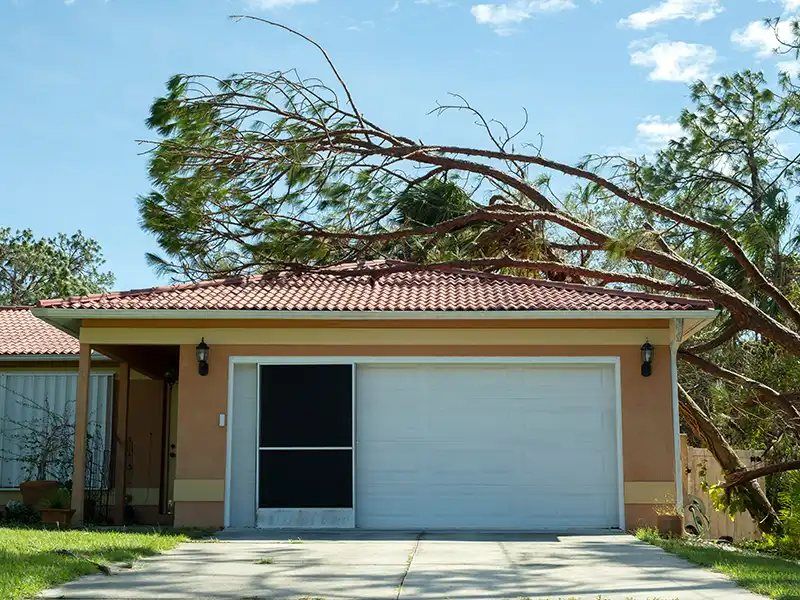
A fallen tree or large branch can break through a roof or wall and leave water, debris, and broken materials behind. Stay clear at first, since a damaged structure and a tree under tension can both be dangerous. Removing a tree is work for a tree service. We deal with the interior damage and the water.
Lightning, Power, and Fire-Adjacent Damage
Lightning can start a fire or cause electrical damage, and a power loss can lead to other problems. Electrical systems that were hit should be checked by a licensed electrician before you use them. If lightning caused a fire, our fire damage restoration work covers smoke, soot, and firefighting water.
Storm Damage Repair, Cleanup, and Restoration Services
Storm recovery is more than roofing or debris removal. Our storm work can include:
- Assessing the damage and tracing where water entered
- Extracting standing water and drying wet materials with structural drying
- Removing materials that cannot be dried or cleaned, according to the scope we agree on - Monitoring moisture until the building is dry
- Documenting the loss with photos, moisture readings, and an itemized scope
- Planning repairs and rebuilding
For rebuilding, we are a licensed Arizona contractor (ROC 345010), and our reconstruction services cover rebuilding after damage. Permanent roof and exterior repairs are their own scope, and we will tell you where restoration ends and repair begins.
How Our Storm Restoration Process Works
The work usually follows this order.
1. Safety Review and Damage Assessment
We start once the property is safe to enter. We trace where water got in and record what we find with photos and notes. Structural and electrical concerns go to qualified professionals, and we do not decide whether a building is safe to occupy.
2. Temporary Protection and Board-Up
Broken windows, doors, and wall openings let in more water. Board-up closes them until permanent repairs are made, and a damaged roof goes to a roofing contractor. We board up the openings once they can be reached safely, and note each opening and the water it let in, so the restoration plan reflects it.
3. Water Mitigation and Structural Drying When Needed
If water got in, we remove it and dry the building. We use moisture meters and thermal imaging to find water in materials, then dry with air movers and dehumidifiers and keep taking readings until the materials are dry.
4. Cleanup, Removal, and Documentation
We clean affected areas and remove materials that cannot be dried or cleaned. We keep records throughout: photos, moisture readings, and an itemized scope.
5. Repair Planning or Reconstruction Coordination
When the building is dry and clean, we go over what needs repair. Where the damage calls for rebuilding, we are a licensed Arizona contractor (ROC 345010), and we can talk through the scope with you.
6. Final Walkthrough
At the end we walk the affected areas with you, review the final moisture readings, and go over what was done and anything that remains.
Storm Water Damage and Moisture Risk Reduction
Rain that comes through a roof or window can wet insulation, ceilings, wall cavities, and flooring. Signs include ceiling stains, bubbled paint, damp carpet, and a musty smell. The visible wet spot is often smaller than the wet area behind it.
The risk grows with time. Materials that stay wet can break down, and mold can grow when moisture is left in place. In Greater Tucson's dry air a surface can look dry while materials under it are still wet, so we rely on moisture readings, not appearance.
The full detail is on our water pages. Water damage restoration covers the full process, and structural drying explains how we dry a building. If wet materials have already been left for some time and you see mold, our mold remediation work covers that stage.
Insurance Documentation After Storm Damage
Storm damage may be covered, but coverage depends on the policy and the cause of the loss, and your insurer makes the decision. Many standard homeowners policies treat flood damage separately from damage caused by wind or rain coming in through a damaged roof, so ask your insurer which applies to your loss.
We document storm damage with photos, moisture readings, and an itemized scope. We work with all major insurance carriers, and we can communicate with your adjuster about what we documented.
Photograph the damage before anything is moved, keep receipts for emergency expenses, and call your insurer early. Our guide to the insurance claims process explains the steps.
Commercial Storm Damage Restoration
A storm that damages a business also costs it time. We work with owners and property managers of offices, retail spaces, restaurants, warehouses, and multifamily and managed properties.
We focus on safety, clear documentation, and phased work. Tell us the use and size of the building when you call, and we will talk honestly about what the work involves. Our commercial restoration services page has more on business losses.
Choosing Storm Damage Restoration Services in Tucson, AZ
After a storm, you may hear from contractors you do not know. A company based in your area is easier to reach later. Quick Restore of Tucson is based in Tucson, with our office on East Speedway, and we serve Greater Tucson. We know what monsoon season does to buildings here: sudden storms, flash flooding, runoff, and the way stucco and slab construction hide moisture.
We are an IICRC Certified Firm and a licensed Arizona contractor (ROC 345010). We document the work as we go, so you can see what was found and what was done.
Get Storm Damage Help in Tucson, AZ
If wind, hail, or debris has damaged your home or business, stay clear of unsafe areas and follow emergency and utility instructions. Then call Quick Restore of Tucson at (520) 488-6759 to talk through the affected areas and next steps. We offer 24/7 emergency service, and every emergency reaches a live team member, day or night. We dispatch right away and give you a realistic arrival estimate.
If it is not an emergency, you can request service and tell us what the storm did, which areas are affected, and how we can reach you. We assess the damage, tell you what we find, and plan the work with you.