Recover Your Property With Flood Damage Restoration in Tucson, AZ
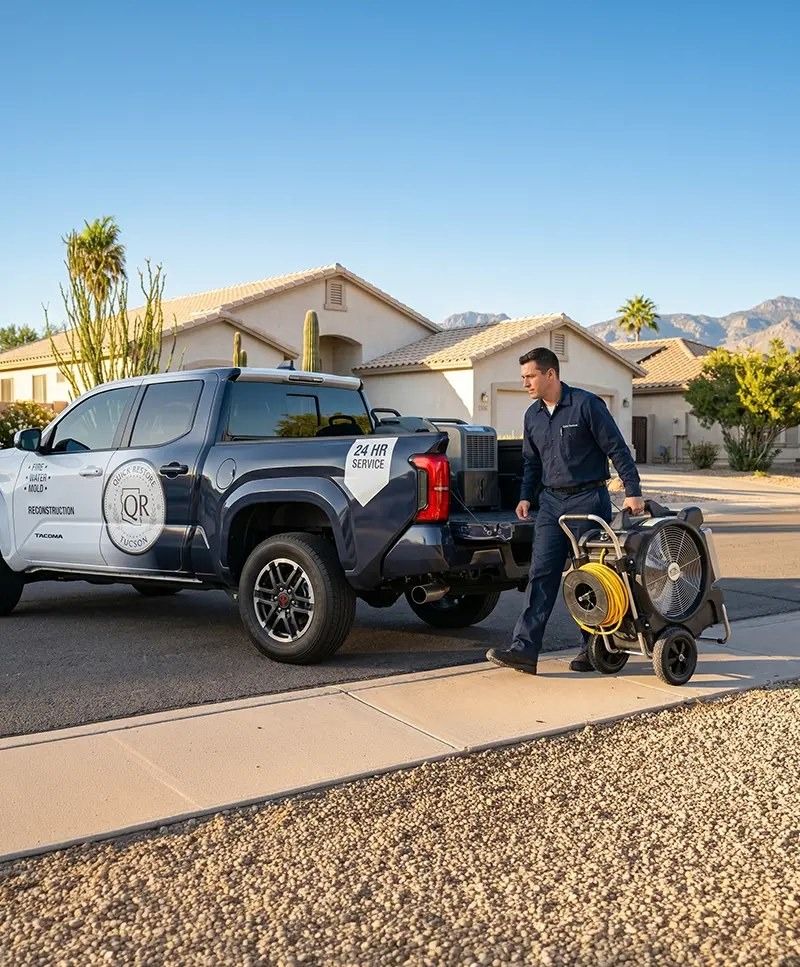
A flood changes how a loss is handled. Water that comes in from outside, whether it is storm runoff, heavy rain, or another outside source, carries soil and debris, and it can carry more than that. Quick Restore of Tucson provides flood damage restoration in Tucson, AZ for homes and businesses. We assess the loss, remove the water, decide which materials need attention, dry the structure, and help you plan the repair.
Those are separate stages, and we keep them separate on purpose. Removing water is not the same as drying a building, and drying a building is not the same as rebuilding it. Knowing where you are in that order is what keeps a flood recovery from feeling like one big unknown.
Call (520) 488-6759 for emergency service. We offer 24/7 emergency service, and every emergency reaches a live team member, day or night. Tell us where the water entered, how far it spread, and whether you can get into the space safely. We dispatch right away and give you a realistic arrival estimate. For the wider picture of how we handle water losses, see our water damage restoration overview.
Assess Floodwater Sources and Access Before Cleanup
Before anyone starts cleaning, we need to know where the water came from and whether it is safe to enter. Floodwater can carry waste, chemicals, germs, and debris, and it can look clean when it is not. Appearance does not tell you whether it is safe.
When you call, we ask:
- Where the water entered the building, and whether it is still coming in
- Which rooms or levels are affected, and how deep the water is or was
- Whether sewage may be involved, such as a backed-up drain or toilet
- Whether power is still on, and whether water is touching outlets, cords, or appliances
- Which areas were already wet or damp before this event
Greater Tucson's monsoon season, roughly mid-June through September, brings sudden heavy storms, and flash flooding and storm runoff are a common cause of water entering homes and businesses here. Storm water often comes in at doors, low thresholds, garages, and along the slab. Tell us where you saw it come in, and we will plan around it.
Please do not wade through floodwater to reach a breaker or an outlet, because water and live power can seriously hurt you. If the panel is not reachable on dry footing, leave it alone and call a licensed electrician or your utility. Once we are on site, we look for hazards, electrical ones included, and begin work as soon as the space allows it. Where a room is not ready, we explain what has to happen first.
If sewage is part of the picture, the job changes: keep people and pets away from it, and tell us when you call so we can say plainly what we can and cannot take on. Our assessment covers the property and the cleanup. It does not replace a decision from a utility, a licensed trade, or a public authority about whether a building can be used.
Remove Standing Water and Decide Which Materials Need Attention
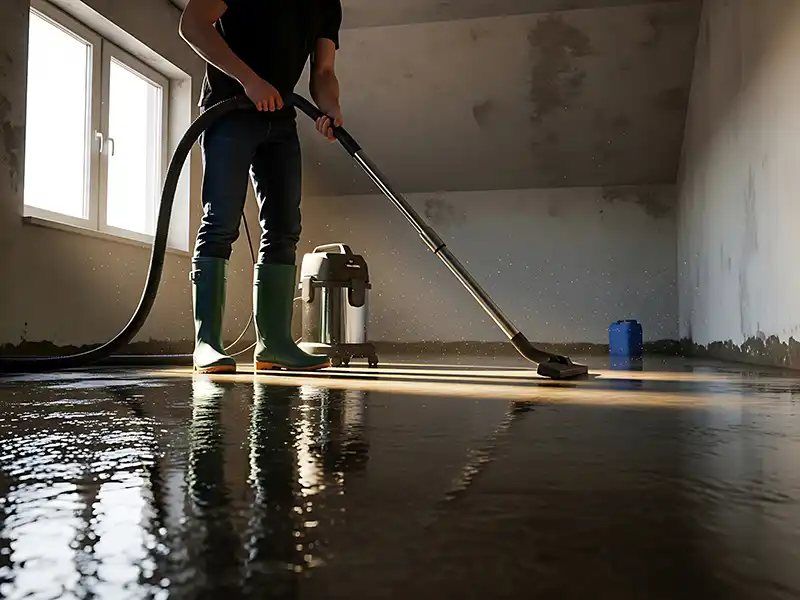
Once access is safe, we remove the standing water. We use pumps for deeper water and extraction equipment for carpet and hard floors. Our water extraction page explains the removal step in detail.
Then comes the part that makes flood work different: deciding what to do with the materials the water touched. We look at flooring, carpet pad, the bottoms of walls, insulation, cabinets, and concealed areas, based on where the water actually went. Each material gets a decision, and the decision depends on the source of the water, how long the material was wet, what it is made of, and what condition it is in.
Here is how those decisions usually look:
- Carpet and carpet pad: floodwater is not clean water, so the pad is commonly removed, and carpet is assessed layer by layer
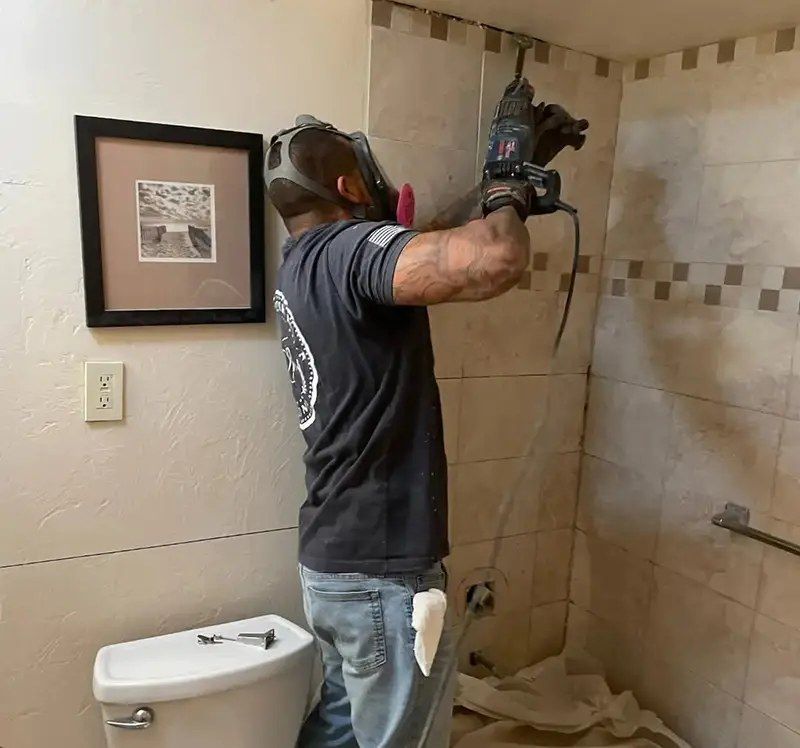
- Drywall: lower sections that soaked in floodwater are often removed, because they hold water and are hard to clean
- Insulation: removed when it is soaked, because it holds moisture and contamination
- Cabinets and trim: assessed for how long they were wet and what they are made of
- Hard flooring and subfloor: checked for moisture in the layers underneath before anyone decides
Drywall and insulation that floodwater or sewage reached, and absorbent items that cannot be cleaned and dried, usually have to be disposed of. Other materials need an individual look. We tell you what we find before we remove anything, and we do not promise that any material can be saved until we have inspected it.
Many Greater Tucson homes are stucco on slab foundations. Water can move into stucco walls and under flooring on a slab, so we do not stop at what is visible. We check the wall bases and the floor edges, because the surface can dry in the desert air while the material underneath stays wet.
Track Moisture and Plan the Drying Handoff
Taking the water out does not mean the building is dry. Moisture stays in flooring, wall bases, cabinets, framing, and cavities. We use moisture meters and thermal imaging to find it. A thermal camera shows differences in surface heat, and the meters confirm whether materials are actually wet. We record readings room by room, so we know how far the water traveled and can track drying.
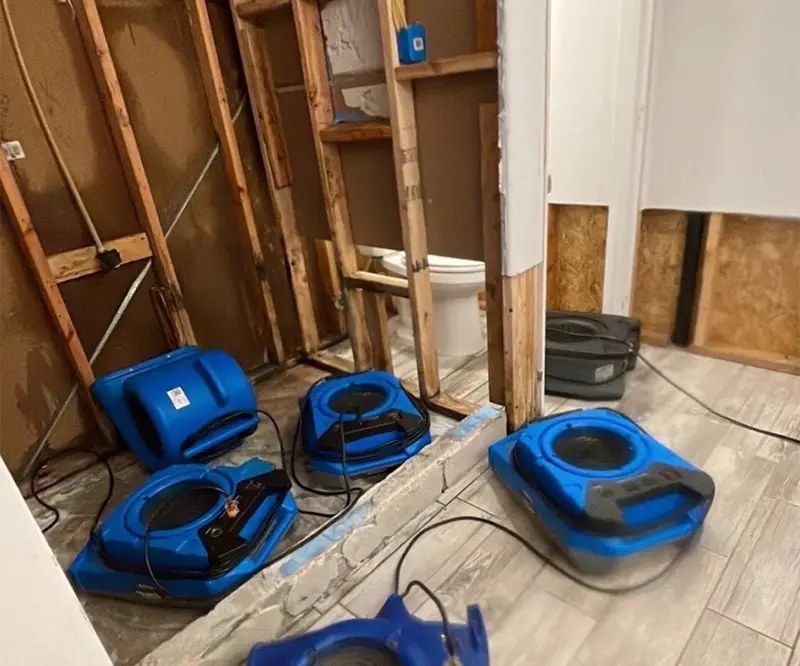
From there we set up a drying plan for the exposed and the concealed materials. It uses air movers and dehumidifiers, with repeat readings until materials read dry. Our structural drying page explains that part of the work.
How long drying takes depends on the materials and the conditions. It commonly takes days, and for some losses it can run longer. We cannot give one number that fits every flood, and we do not give a fixed drying time before we have seen the building.
Drying is also separate from rebuilding and from deciding when a space is ready to use. We keep records of the readings as we go, so there is a clear point at which materials have reached a dry condition, and you can see it for yourself.
Document Belongings and Coordinate the Repair Scope
A flood loss usually involves more than the building. Furniture, rugs, electronics, and personal belongings get wet too. Before anything is moved or thrown away, take photographs of each room and of the items in it, when it is safe to do so. Write a short description of each item that was affected, along with the room it was in.
We document the building side of the loss with photos, moisture readings, drying records, and an itemized scope of the work. We work with all major insurance carriers, and we can communicate with your adjuster about what we documented. Coverage and claim decisions belong to your insurance company, and many policies treat flood damage differently from other water damage, so ask your insurer early which part of your loss your policy covers. Our insurance claims process page walks through where documentation fits.
We are a licensed Arizona contractor (ROC 345010). When the drying is done, the repair scope is its own conversation. Cleanup, drying, and rebuilding are different parts of the work, so it helps to have each one written out separately. Our reconstruction services page explains how we approach rebuilding after damage. We explain who is responsible for each stage and what comes after it.
Request a Flood Damage Restoration Assessment in Tucson, AZ
If floodwater is in your home or business, call Quick Restore of Tucson at (520) 488-6759 for flood damage restoration in Tucson, AZ. We offer 24/7 emergency service across Greater Tucson, and we are based in Tucson, on East Speedway.
When you call, tell us which areas are affected, where the water came from if you know, when it started, and anything that limits safe access. If you do not know an answer, that is fine. We cannot quote a cost without seeing the scope, and we explain the scope before work begins.
If it is not an emergency and you would rather send the details, you can request service. For storms that also damaged your roof, windows, or exterior, see our storm damage restoration page.