Some basement water damage claims involve sewage or contaminated backups, so you need to act fast. Emergency sewage cleanup should begin by stopping the flow, shutting off power and water when it’s safe to do so, and keeping people and pets away from the affected area. Proper protective gear, careful removal, and thorough disinfection are essential before hidden moisture turns into mold. The next steps matter just as much, because handling the cleanup in the right order can help prevent a much larger problem.
Key Takeaways
- Shut off water and power immediately to stop further sewage flow and reduce electrical shock risk.
- Keep people and pets out of the area, and block spread with closed doors and absorbent barriers.
- Wear full protective gear, including gloves, boots, eye protection, and respiratory protection if needed.
- Remove standing sewage and discard porous materials like carpet, drywall, and upholstery that cannot be disinfected.
- Clean, disinfect, and dry all remaining surfaces thoroughly, then monitor for mold and hidden moisture.
Stop the Sewage Backup Fast
First, shut off all water use in the affected area to prevent more sewage from entering the system, then locate and close the main water supply if the backup is still active.
Next, contain the spread by blocking floor drains with tight covers and placing absorbent barriers at doorway thresholds.
You should move people and pets out, then isolate the room with closed doors to limit contamination.
Document the source and extent of the backup so you can brief responders clearly.
Follow sewage prevention tips by avoiding any flushing, sink use, or appliance discharge until the line is cleared.
Apply emergency response strategies by calling a licensed sewer professional right away and staying in the safe zone until the flow stops.
You’re handling this fast, and your crew’s control matters.
Shut Off Power and Water Lines
Shut off the main power at the breaker before you enter any affected area to reduce the risk of electrical shock.
Then stop the water supply at the main valve to prevent additional flow into the sewage-damaged space.
Verify both shutoffs are complete before you begin any cleanup work.
Shut Off Main Power
Before you enter the affected area, cut power at the main breaker and close the main water valve to reduce the risk of electrocution, further contamination, and additional flooding.
Confirm the breaker is fully off, then lock or tag it if your site uses safety protocols. You should treat standing sewage as conductive and assume hidden electrical hazards may exist in outlets, appliances, and wall cavities.
Wear insulated gloves and dry boots before you approach any panel. Keep your team informed, and don’t restore power until a qualified electrician verifies that circuits are safe and dry.
If you smell burning or hear arcing, back out immediately. Stay coordinated, follow your cleanup plan, and protect everyone in the space by maintaining clear, controlled access until the area’s power is secured.
Stop Water Supply
Once the electrical hazard is controlled, close the main water valve to stop fresh flow into the sewage-affected area. You’re protecting the space and the team by preventing backflow and limiting contamination spread.
Use approved water shutoff methods: turn the valve clockwise, then verify that fixtures downstream stop running. If the valve’s stuck, use emergency plumbing tools carefully; don’t force brittle fittings.
- Locate the main shutoff near the meter or foundation wall.
- Test nearby faucets to confirm pressure has dropped.
- Label the valve so everyone in your crew knows it’s secured.
Keep communication clear, because you all need the same status before cleanup begins. If you can’t isolate the line, contact a licensed plumber immediately.
Wear Protective Cleanup Gear
When you enter a sewage-contaminated area, you should suit up in full protective gear to reduce direct exposure to pathogens and hazardous materials.
Wear protective clothing, gloves, boots, and eye shields as required by cleanup protocols. Use respiratory protection if aerosols or fumes may form, and check that every seal fits before you begin.
Keep skin exposure low by covering wrists, ankles, and any exposed cuts. Maintain hazard awareness while you work, and follow chemical safety guidance for disinfectants and residues.
Keep first aid supplies nearby in case of splash, puncture, or abrasion. After each task, remove contaminated safety equipment carefully, then wash hands and follow personal hygiene steps to support infection prevention.
You’re part of a crew that protects itself by staying disciplined, prepared, and precise throughout the cleanup.
Clear People and Pets From the Area
Clear the area of people and pets right away so you can control exposure and prevent contaminated traffic from spreading sewage through nearby spaces. You’ll keep everyone safer when you enforce safety protocols and guide them to a clean staging point outside the affected zone.
- Ask everyone to leave the room and close the door behind them.
- Move pets to a separate, secure location and follow pet precautions for leashes, carriers, and feeding bowls.
- Mark the perimeter with tape or cones so no one reenters until you’ve finished the initial assessment.
You should speak calmly and directly, because clear instructions help your household or team stay coordinated.
If you’re working with neighbors or staff, assign one person to monitor access and report any reentry immediately.
Pump Out Standing Sewage Water
Begin pumping out standing sewage water as soon as the area is isolated and the source is controlled, using a sewage-rated submersible pump or wet vacuum designed for contaminated water.
Position the sewage pump in the deepest point of the standing water, then route discharge to an approved sanitary location. Keep your hose secure to prevent splashing and backflow.
Monitor the flow continuously, and stop the unit if solids clog the intake. You’ll move faster as a team when you check cords, fittings, and fuel or power supply before you restart.
Remove water in stages, not all at once, so the floor stays stable and you maintain control.
When the visible standing water is gone, verify low spots and corners for residual pools before you proceed.
Remove Porous Materials That Can’t Be Saved
After the standing water is removed, you need to pull out porous materials that can’t be fully sanitized, including carpet, carpet pad, drywall, insulation, upholstered furniture, and other absorbent contents.
These porous materials trap sewage and delay recovery, so remove them with deliberate cleanup techniques.
- Cut carpet and pad into manageable sections and bag each piece.
- Remove saturated drywall and insulation to the nearest clean, dry edge.
- Take out wet furniture, rugs, and fabric items that hold odor or residue.
Keep work areas organized so you can move safely and support the rest of the cleanup.
Seal debris in heavy-duty bags or wrap it in plastic before disposal.
Wear protective gear, keep children and pets away, and follow local disposal rules.
You’re protecting your space and helping the team restore it correctly.
Disinfect Basement Surfaces Safely
Once the saturated porous materials are out, you can clean and disinfect the exposed basement surfaces. Wear gloves, eye protection, and a respirator if needed.
First, wash concrete, sealed tile, and metal with detergent and warm water to remove residue. Then choose disinfectant types that match the material and label directions; bleach solutions, quaternary ammonium products, or EPA-registered cleaners can work on safe surfaces.
Apply the disinfectant with a pump sprayer or mop, keep the surface visibly wet for the required contact time, and don’t mix chemicals. Scrub seams, corners, and drains with separate brushes. Rinse only when the product requires it.
Use clean cloths for each section, and discard them after use. If a surface stays stained, rough, or damaged, treat it as suspect and replace it.
Dry the Basement After Sewage Cleanup
With the area disinfected, you can dry the basement by moving air across every wet surface and removing moisture from the air. Set fans to create steady air circulation, and open vents if outdoor humidity is lower. Position a dehumidifier near the dampest zone and empty it often; consistent dehumidifier use speeds drying and helps your crew stay on track.
- Pull furniture and storage off the floor.
- Run fans in overlapping directions.
- Check walls, trim, and concrete for remaining dampness.
Keep cords elevated, use ground fault protection, and avoid blocking airflow with boxes or tarps.
When floors feel dry and the air no longer feels heavy, you’ve restored a safer, more workable space for everyone helping with cleanup.
Monitor the Basement for Mold Growth
Inspect the basement for visible mold growth, musty odor, discoloration, and peeling materials after cleanup.
Track moisture levels with a hygrometer and verify that surfaces, framing, and insulation stay dry.
Check behind walls, under flooring, and in corners for hidden contamination before you close the area back up.
Mold Growth Signs
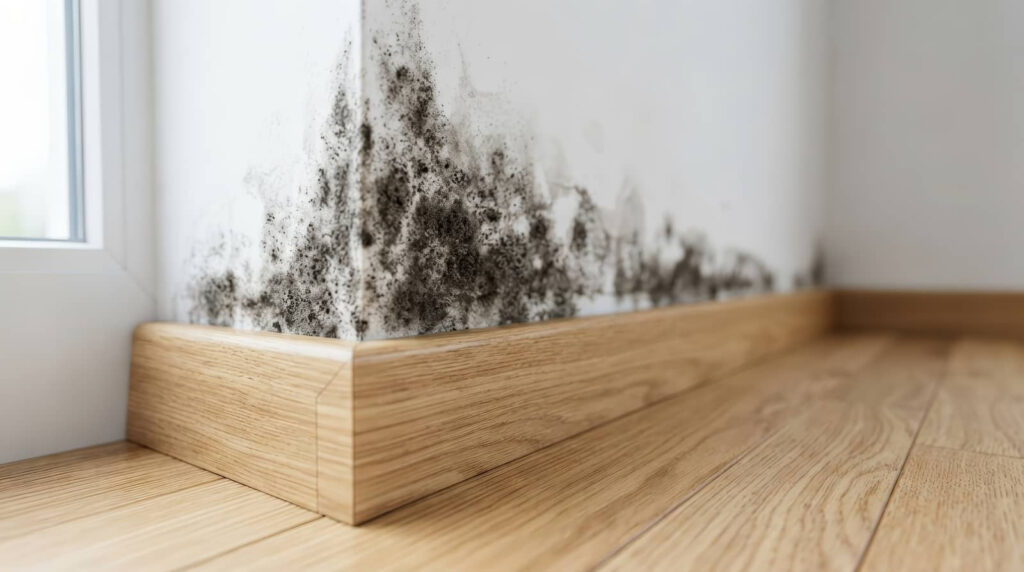
How do you know if sewage moisture has started mold growth in the basement? You inspect for visible colonies, odor, and surface change. In your cleanup team, treat these signs as early warnings for mold prevention and health risks. Check every wall seam, baseboard, and stored item.
- Look for fuzzy, slimy, or powdery patches in white, green, black, or gray.
- Smell for a persistent musty, earthy odor that doesn’t fade after airing out.
- Note warped drywall, stained concrete, or paint that bubbles and peels.
If you spot any of these conditions, isolate the area, document it, and continue decontamination. Your crew deserves a basement that’s safe, coordinated, and ready for the next step.
Moisture Monitoring
After you’ve identified visible mold signs, keep tracking the moisture that feeds it. Place moisture sensors near the slab, walls, and sump area, then log readings at least twice daily. You’ll want a baseline that shows whether humidity and surface moisture are falling after cleanup.
Keep basement airflow steady with dehumidifiers and fans, and check that dampness control measures stay active through the full drying period. If readings rise, pause restoration work and correct the source before you close surfaces.
Use a simple chart so you and your household can see trends quickly and stay aligned on next steps. Drying isn’t complete until the sensors show stable, low levels for several days, and the room feels consistently dry under normal use.
Hidden Contamination Checks
Even when surfaces look dry, sewage can leave hidden contamination in wall cavities, under baseplates, behind insulation, and beneath flooring. So you need to check the basement for new mold growth during and after cleanup. You’re not alone in this step; use a methodical sweep to catch hidden sources before they spread.
- Inspect joists, sill plates, and carpet edges for discoloration, musty odor, or fuzzy colonies.
- Measure humidity and verify airflow; keep readings below 60% if possible.
- Document findings and start contamination testing on suspect materials, especially porous finishes.
If you detect active growth, isolate the area, remove affected materials, and disinfect structural surfaces.
Recheck daily for one week, then weekly until readings stay stable and no odor returns.
Call a Sewage Cleanup Team
When sewage backs up, call a certified sewage cleanup team immediately so they can assess the contamination, isolate the area, and begin safe removal and disinfection.
You shouldn’t enter the affected zone until they confirm it’s stable. Their technicians measure sewage health risks, document damage, and set containment controls to protect your household and nearby occupants.
They arrive with cleanup equipment, including pumps, air scrubbers, disinfectants, and protective barriers, so the job moves fast and follows code.
Give them access to shutoff points, utility maps, and any prior inspection notes.
Ask for a clear scope, drying plan, and disposal protocol before work starts.
Wrap-Up
When you stop the backup, shut off power and water, gear up, clear the area, pump out the waste, disinfect, and dry everything, you do more than clean a mess—you outsmart a disaster that thinks it owns the basement. Keep checking for moisture and mold, because sewage likes to return when you relax. If contamination lingers or the damage runs deep, call a sewage cleanup team before the invisible problem gets louder than the flood.