Floods can cause devastating flood damage, with many natural disasters involving flooding. When faced with such an event, it’s vital to approach cleanup with a detailed plan. You need to prioritize safety, assess the damage, and act swiftly to mitigate further issues. Understanding the key strategies for effective flood damage cleanup is fundamental to restoring your space and preventing long-term consequences. What steps should you take first to ensure a thorough recovery?
Key Takeaways
- Prioritize safety by assessing hazards and wearing protective gear before beginning any cleanup efforts.
- Swiftly remove standing water using submersible pumps and wet/dry vacuums to minimize damage.
- Employ air circulation and dehumidifiers to dry affected areas and maintain humidity levels below 60%.
- Document water damage and address mold growth immediately to prevent further issues.
- Consider hiring professional remediation services for a thorough assessment and effective restoration techniques.
Assessing the Damage and Safety Concerns
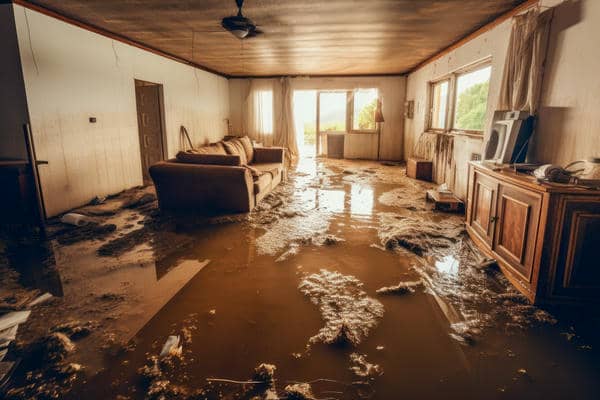
When you begin evaluating flood damage, it’s important to prioritize safety to avoid further risks. Start by examining the area for potential hazards such as unstable structures, exposed electrical wiring, or contaminated water. Make certain you wear appropriate protective gear, including gloves and sturdy boots, to safeguard yourself against sharp objects and harmful substances.
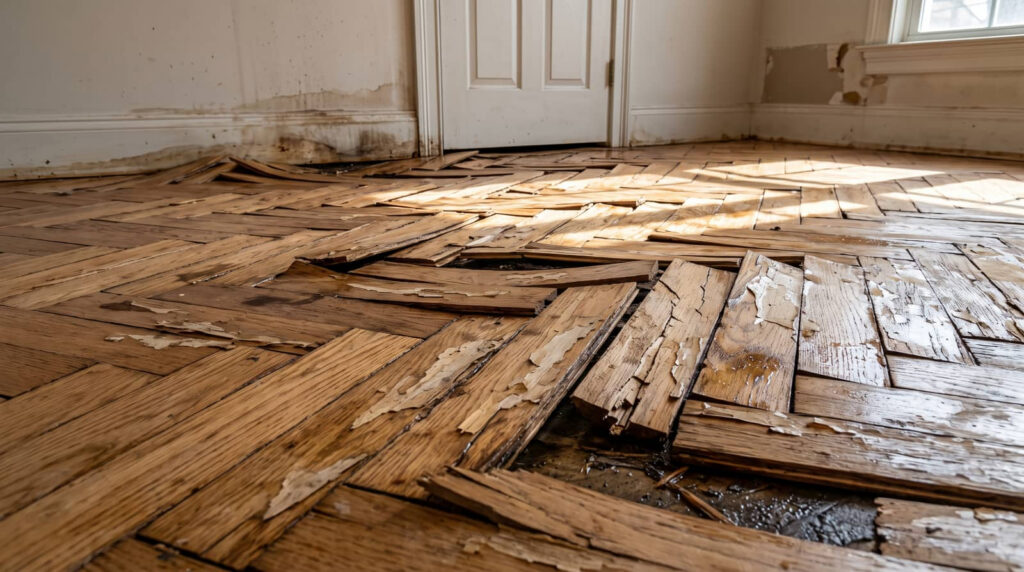
Next, conduct a thorough damage evaluation. Document the extent of water intrusion, noting affected areas and materials. This appraisal should include walls, flooring, and personal belongings, as these details will be significant for insurance claims and restoration planning.
Be cautious of mold growth, which can develop quickly in damp environments. If you notice any signs, it’s essential to address this concern immediately.
Immediate Water Removal Techniques
After evaluating the damage, it’s vital to act swiftly to remove standing water from the affected areas.
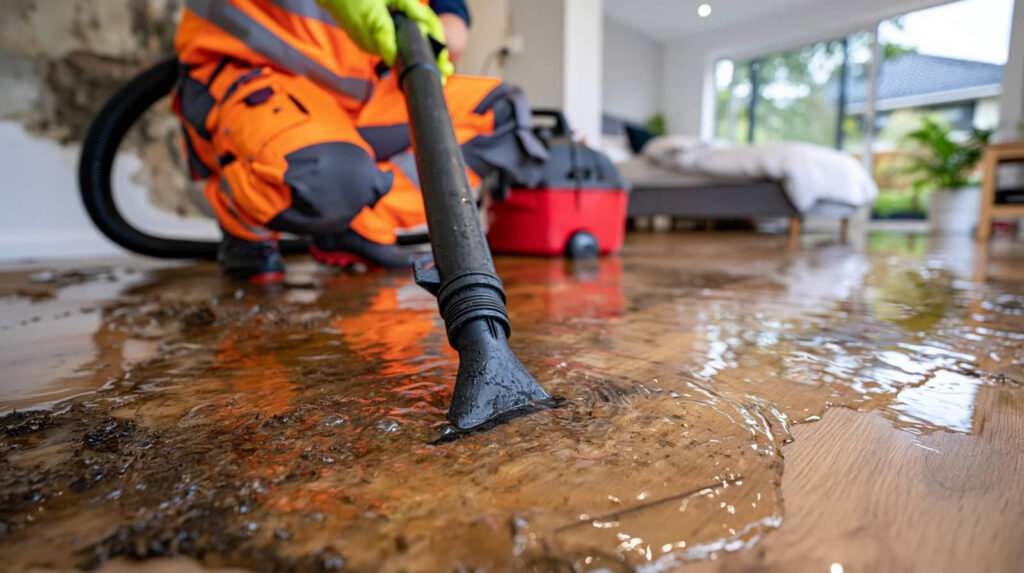
Begin with water extraction techniques to ensure you eliminate as much water as possible. Using submersible pumps is critical here; they effectively remove large volumes of water quickly. Position the pump in the deepest areas of the flooded space to maximize efficiency.
As you operate the pump, monitor the water levels closely, adjusting the pump’s location if necessary to prevent water accumulation.
If the situation allows, use wet/dry vacuums for smaller areas or residual water that the pump can’t reach.
Remember to wear protective gear during this process to keep yourself safe from contaminants.
Drying and Dehumidification Processes
To effectively restore your space post-flood, drying and dehumidification processes are essential, as they prevent mold growth and structural damage.
Start by employing efficient air circulation techniques. Use fans to promote airflow, which helps evaporate moisture from surfaces. Position them strategically to ensure all areas are covered.
Next, consider moisture control methods. Dehumidifiers can greatly reduce humidity levels, making it easier to dry out the affected materials. Aim for a humidity level below 60% to inhibit mold development.
Monitor the drying process regularly. Check for hidden moisture in walls and flooring, as these areas can harbor dampness.
Using moisture meters can provide accurate readings, making sure you address all affected spots.
Mold Prevention Measures
Even with thorough drying and dehumidification, the risk of mold growth remains a concern in flood-damaged areas. To effectively prevent mold, you must focus on controlling moisture and enhancing air circulation throughout your space.
First, verify that affected areas are well-ventilated; open windows and use fans to increase airflow. This helps disperse mold spores and inhibit their growth.
Next, regularly check for leaks and fix any plumbing issues promptly to minimize water accumulation. Consider using a dehumidifier to maintain indoor humidity levels below 60%.
Additionally, clean and dry any materials that have absorbed water, such as carpets and drywall, within 24-48 hours to prevent mold proliferation.
Lastly, apply mold-resistant products and sealants to vulnerable surfaces, creating a protective barrier. By taking these proactive measures, you can foster a healthy environment and greatly reduce the chances of mold infestation.
Professional Remediation and Restoration Services
When flood damage occurs, engaging professional remediation and restoration services can be essential to effectively restoring your property.
These specialists use advanced remediation techniques to assess and address water damage, ensuring that both visible and hidden issues are resolved. They’ll utilize equipment like dehumidifiers and industrial fans to eliminate moisture, preventing mold growth and further structural damage.
In addition, restoration methods employed by professionals cover everything from repairing drywall to replacing flooring. They’re trained to handle hazardous materials safely, ensuring your home remains a healthy environment.
By collaborating with experts, you save time and effort and gain peace of mind knowing the job is done correctly.
Ultimately, choosing professional services means you’re part of a community that values safety and thoroughness in restoring your home to its pre-flood condition.
This connection fosters a sense of belonging as you rebuild and recover from such a distressing event.
Frequently Asked Questions
How Can I Prevent Flood Damage in the Future?
To prevent future flood damage, you should implement flood-proofing techniques, like elevating structures and installing barriers. Additionally, make landscape modifications such as grading soil away from your home to direct water flow effectively.
What Insurance Coverage Is Needed for Flood Damage?
You need flood insurance that meets your specific needs. Focus on coverage limits that adequately protect your property and belongings, ensuring you’re financially secure in the event of a disaster. It’s essential for peace of mind.
Are There Government Assistance Programs for Flood Victims?
Yes, you’ve got options! Federal assistance programs like FEMA can provide essential support, while local resources often offer immediate help. Balancing these can strengthen your recovery, ensuring you’re not alone in this challenging time.
How Do I Document Flood Damage for Insurance Claims?
To document flood damage for your insurance claim, systematically assess the damage, take detailed photos, keep receipts, and compile a list of affected items. This organized approach strengthens your claim during the insurance claim process.
What Personal Protective Equipment Is Necessary During Cleanup?
You’ll need protective gear like gloves, masks, and waterproof boots during cleanup. These safety measures safeguard you from contaminants and hazards, ensuring your health remains a priority while tackling the challenging task ahead.
Final Thoughts
In flood damage cleanup, taking a systematic approach is essential to prevent further issues. By prioritizing safety, swiftly removing water, and ensuring thorough drying, you can effectively mitigate damage. Don’t let mold take root; addressing it promptly is key. If the situation feels overwhelming, remember, sometimes it’s best to let the pros handle it. By following these strategies, you can navigate the aftermath of a flood and restore your space, turning a challenging situation into a manageable one.