When it comes to mold remediation, understanding the process is vital for effective results. You need to assess the affected areas thoroughly and contain them to prevent spore spread. Utilizing specialized equipment and eco-friendly agents enhances safety during removal. Confirming proper ventilation and wearing personal protective equipment (PPE) is essential for your health. But how do you guarantee long-term success and prevent future growth? The answer lies in a strategic approach.
Key Takeaways
- Always use appropriate personal protective equipment (PPE) to ensure safety during mold remediation.
- Contain the affected area with plastic sheeting to prevent mold spores from spreading.
- Employ specialized cleaning techniques, such as HEPA vacuuming, for effective mold removal.
- Ensure proper ventilation in the workspace to minimize inhalation risks during the process.
- Conduct follow-up inspections to monitor for signs of mold recurrence and ensure long-term effectiveness.
Why Professional Mold Remediation Matters
When you discover mold in your home, addressing it swiftly and effectively is essential, as mold can pose serious health risks and structural damage. Ignoring mold not only exacerbates its spread but also heightens the mold health effects on you and your family, including respiratory issues and allergic reactions.
Professional mold remediation guarantees thorough removal and proper containment, minimizing health risks. While remediation costs may seem intimidating, consider the long-term benefits of a safe living environment.
Professionals utilize specialized equipment and techniques, making sure that mold doesn’t return. Investing in expert help not only protects your home’s structure but also safeguards your family’s well-being, fostering a sense of security and belonging in your living space.
Don’t compromise on safety; prioritize professional assistance.
How to Identify Mold Growth After Water Damage?
After water damage, it’s essential to identify mold growth promptly.
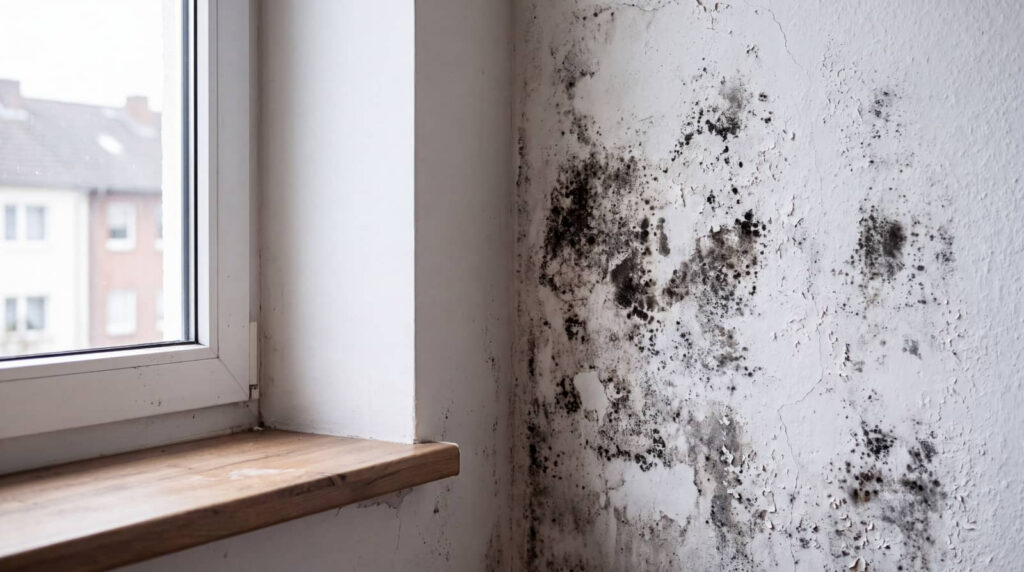
Start by checking for visual signs like discoloration and fuzzy patches on surfaces.
Don’t ignore musty odors and assess moisture levels, as these can indicate hidden mold issues.
Visual Signs of Mold
Mold can often reveal itself through several distinct visual signs, especially following water damage. Recognizing these signs early can help you take action before the problem worsens.
Look for:
- Mold colors: Shades of green, black, or white can indicate mold presence.
- Mold patterns: Irregular spots or patches may form on walls, ceilings, or floors.
- Surface texture: You might notice a fuzzy or slimy texture on affected areas.
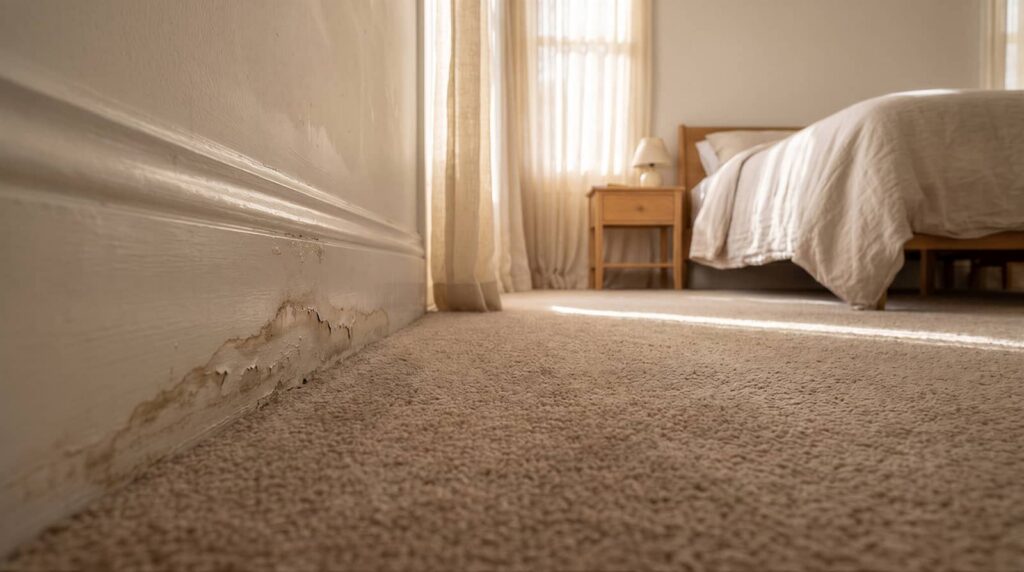
- Discoloration: Stains on walls or ceilings can signal hidden mold growth.
Musty Odor Detection
A musty odor often signals mold growth, particularly in areas affected by water damage. To identify musty odor sources, check basements, bathrooms, and behind appliances where moisture lingers.
Pay attention to hidden spaces, as mold thrives in damp environments, often unnoticed. When you detect a musty smell, act quickly to prevent further growth.
Implementing musty odor prevention strategies is essential. Guarantee proper ventilation in your home and fix leaks immediately.
Use dehumidifiers in high-humidity areas, and regularly inspect for water damage. By recognizing the signs of mold through odor, you can take proactive steps to protect your living space and maintain a healthy environment for you and your family.
Stay vigilant to keep your home mold-free.
Moisture Level Assessment
Detecting moisture levels is essential for identifying mold growth after water damage. You need to perform thorough moisture testing to pinpoint problem areas.
Here’s what to look for:
Damp spots on walls or ceilings, signaling hidden leaks.
Condensation on windows, indicating high humidity levels.
Musty odors often accompany excessive moisture, suggesting mold presence.
Discoloration or stains on surfaces, pointing to potential mold growth.
Safety Tips for Effective Mold Remediation
When tackling mold remediation, guaranteeing safety for yourself and others is paramount. Start by using proper personal protective equipment (PPE) like gloves, masks, and goggles to shield against harmful spores.
Confirm your workspace has effective ventilation systems in place to reduce airborne contaminants. Open windows and use fans to promote airflow, minimizing inhalation risks.
It’s also essential to contain the mold area using plastic sheeting to prevent spores from spreading to unaffected spaces. Before starting, assess your surroundings for potential hazards, such as electrical issues or unstable structures.
Step-by-Step Guide to Safe Mold Removal
When tackling mold removal, it’s essential to prioritize safety and employ effective techniques.
Start by gathering necessary safety gear, like masks and gloves, to protect yourself from exposure.
Then, follow proven removal methods to guarantee thorough and safe elimination of mold.
Essential Safety Precautions
Before starting any mold remediation project, it’s essential to prioritize safety to protect both your health and the environment. Proper safety measures guarantee you maintain good air quality and minimize risks.
Here are key precautions to take into account:
Wear appropriate safety gear: Use gloves, goggles, and N95 respirators to shield yourself from mold spores.
Seal off the area: Close windows and doors to prevent mold spores from spreading to unaffected spaces.
Use a dehumidifier: This helps reduce moisture, making it harder for mold to thrive.
Guarantee proper ventilation: Keep air flowing to minimize airborne contaminants and maintain air quality.
Effective Removal Techniques
Effective mold removal requires a systematic approach to guarantee thoroughness and safety.
First, identify the affected areas and determine the extent of the contamination. Next, secure proper ventilation and wear protective gear.
For removal, employ advanced cleaning methods, such as HEPA vacuuming and specialized mold removal solutions. Use eco-friendly solutions like vinegar or baking soda to treat surfaces, ensuring you minimize environmental impact.
After cleaning, thoroughly dry the area to prevent future growth. Seal any damaged materials and consider using mold-resistant paints or coatings for added protection.
Finally, monitor the area regularly to catch any signs of recurrence early. By following these steps, you can effectively remove mold and foster a healthier living environment for everyone.
Strategies for Preventing Future Mold Growth
Although mold can thrive in various environments, implementing effective strategies to prevent future growth is crucial for maintaining a healthy indoor space. By taking proactive measures, you can greatly reduce the risk of mold reappearing.
Control humidity: Use dehumidifiers to maintain ideal levels.
Enhance air circulation: Verify your ventilation systems are functioning properly.
Choose the right building materials: Opt for mold-resistant options when renovating.
Perform regular inspections: Check for leaks or dampness in hidden areas.
Incorporating these preventive measures, alongside landscaping tips and moisture barriers, will help you create a mold-resistant environment.
A little effort now can save you from costly remediation later, fostering a safe space for everyone.
How to Choose the Best Mold Remediation Company?
How can you guarantee that you select the right mold remediation company for your needs? Start by verifying credentials ensure they’re licensed and insured.
A thorough mold inspection is critical; a reputable company will conduct this before providing an estimate.
Compare remediation costs; be wary of unusually low bids, as they may indicate subpar service.
Check reviews and testimonials to gauge customer satisfaction.
Ask about their remediation methods and whether they follow industry standards.
Transparency in communication is key; the company should explain the entire process clearly.
Finally, confirm that they offer a warranty on their work, ensuring peace of mind.
What to Expect From Mold Remediation?
When you schedule mold remediation, expect a systematic process designed to eliminate mold and prevent its return.
You’ll encounter various mold types during this process, and trained professionals will employ effective remediation methods tailored to your specific situation.
Here’s what to expect:
Initial Assessment: Experts will identify mold locations and types.
Containment: They’ll seal affected areas to prevent spores from spreading.
Removal: Specialized techniques will eliminate mold safely from surfaces.
Restoration: Finally, they’ll restore affected areas to their original condition.
Throughout this process, communication is key.
Your remediation team should keep you informed, ensuring you feel included and confident in the methods being employed.
Trust in their expertise to effectively address your mold issues.
Frequently Asked Questions
Can I Remediate Mold Myself, or Should I Hire Professionals?
You can tackle small mold issues with DIY methods, but consider the health risks. For extensive growth, hiring professionals guarantees safe and effective remediation, protecting both your home and your well-being from potential hazards.
How Long Does the Mold Remediation Process Typically Take?
Mold remediation typically takes one to five days, depending on mold growth factors and chosen remediation techniques. Isn’t it essential to address the issue swiftly to guarantee your space remains safe and healthy for everyone?
What Are the Costs Associated With Professional Mold Remediation?
Mold removal costs typically range from $500 to $6,000, influenced by factors like the extent of contamination, location, and necessary repairs. Evaluating these remediation factors helps you budget effectively for a thorough solution.
Will My Insurance Cover Mold Remediation Expenses?
Your insurance might cover mold remediation expenses, but it depends on your specific mold policy. Review your coverage details, as some plans exclude mold damage or have limits. Contact your insurer for clarity on your situation.
How Can I Tell if Mold Is Completely Removed?
To guarantee mold’s completely gone, conduct a thorough visual inspection and follow up with air testing. Watch for lingering musty odors or visible spots—those could signal hidden problems that need addressing before you breathe easy.
Review
Effective mold remediation is essential for maintaining a safe environment. While some may hesitate, thinking DIY solutions are sufficient, professional expertise guarantees thorough assessment and safe removal. By following the outlined steps and implementing preventive strategies, you can protect your space from future mold issues. Trust professionals to handle the process efficiently, keeping you informed and confident in your home’s safety. Investing in professional remediation is an investment in your health and well-being.