Imagine returning to your home after a severe storm, only to find waterlogged carpets and damaged belongings. It’s a distressing flood damage cleanup situation, and steering through the cleanup process can feel overwhelming. To effectively restore your space and prevent future issues, you need a structured approach that starts with evaluating the damage. But what comes next, and how can you ensure that you’re not just cleaning up but truly safeguarding your home for the future?
Key Takeaways
- Assess the damage thoroughly, identifying structural issues, electrical hazards, and affected personal belongings to understand the extent of the situation.
- Prioritize safety by wearing appropriate PPE and disconnecting power in affected areas before beginning cleanup.
- Utilize advanced water extraction techniques and set up dehumidifiers to minimize moisture and prevent mold growth effectively.
- Clean and sanitize all surfaces with appropriate disinfectants, paying extra attention to hidden corners to eliminate contaminants.
- Monitor air quality and moisture levels continuously to create a healthy environment and prevent future mold issues.
Assessing the Damage
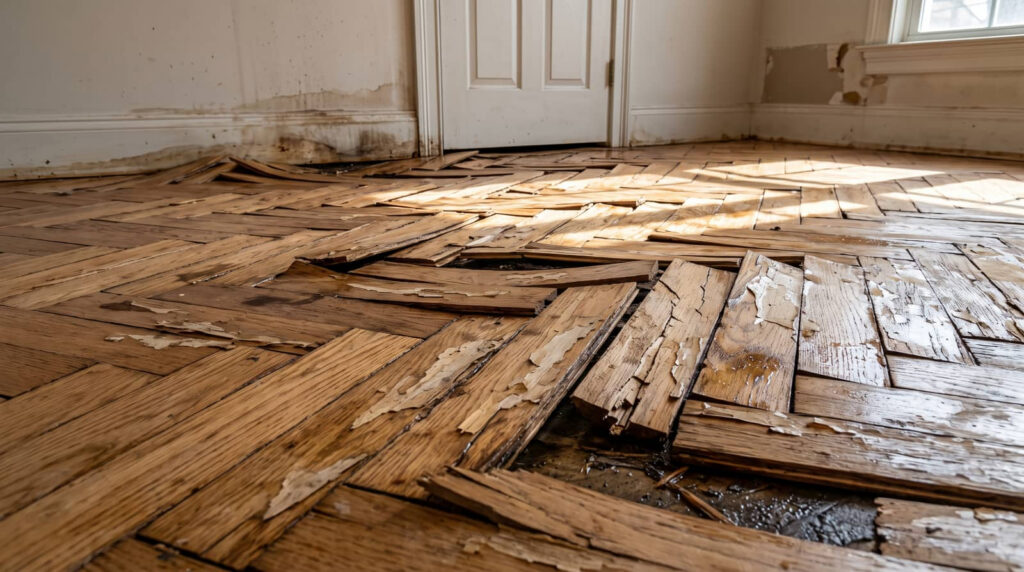
When you experience flooding, evaluating the damage is crucial to understanding the extent of the impact on your property. Start by identifying the damage types, which can include structural issues, electrical hazards, and damage to personal belongings. Each type requires careful consideration as you evaluate the situation.
Utilize assessment tools like moisture meters and infrared cameras to detect hidden water damage, ensuring no area is overlooked.
As you document everything, take photos and notes to support any insurance claims you may need to file. This process helps you grasp the full picture and provides a sense of control during a chaotic time.
Ensuring Safety Precautions
When tackling flood damage cleanup, your safety should be your top priority.
Wearing appropriate personal protective equipment is essential to shield yourself from contaminants, while implementing electrical safety measures prevents potential hazards.
Personal Protective Equipment
Personal protective equipment (PPE) serves as your first line of defense during flood damage cleanup, ensuring your safety in hazardous conditions.
Wearing the right protective gear is important; it shields you from contaminants and helps you feel more secure in a chaotic environment.
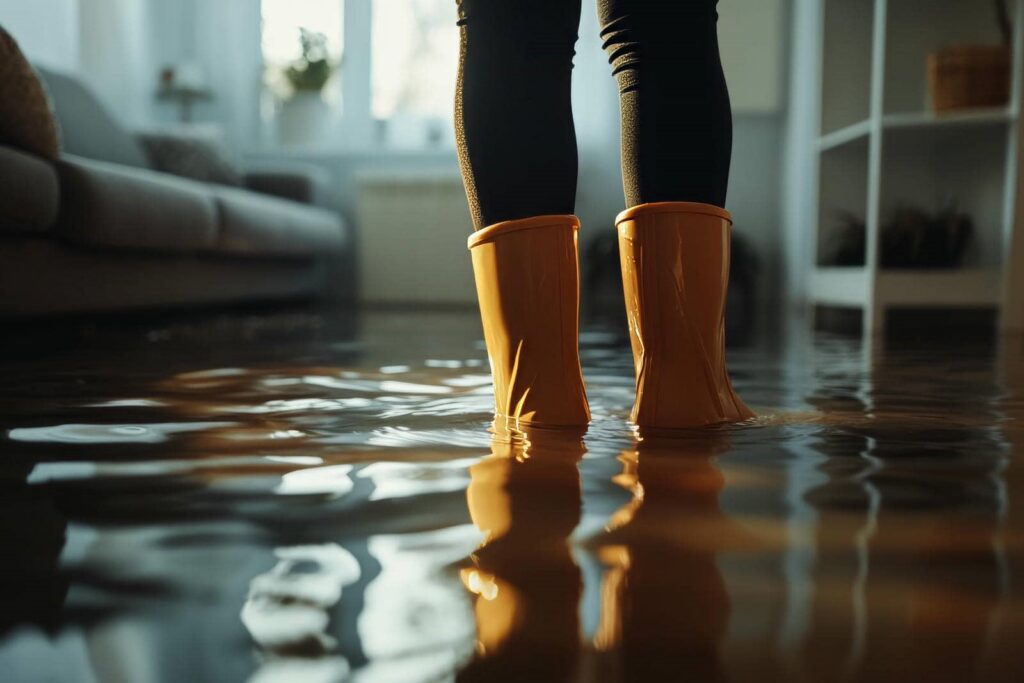
Safety protocols dictate that you wear gloves, masks, and boots to minimize exposure to bacteria and harmful substances.
By prioritizing your well-being, you’re making a significant choice for yourself and your loved ones.
It’s essential to be part of a community where everyone looks out for each other, and adhering to these safety measures fosters that sense of belonging.
Electrical Safety Measures
Although flood damage can be overwhelming, ensuring electrical safety during cleanup is essential to prevent accidents and injuries.
Start by identifying any electrical hazards; don’t assume that everything is safe just because it seems dry. Disconnect power to affected areas at the main breaker to eliminate risks.
Follow established safety protocols, such as using non-conductive tools and wearing rubber-soled footwear. If you’re unsure about handling wires or outlets, it’s best to consult a professional electrician.
Remember, your well-being is paramount; rushing through these precautions can lead to serious consequences.
Water Extraction Techniques
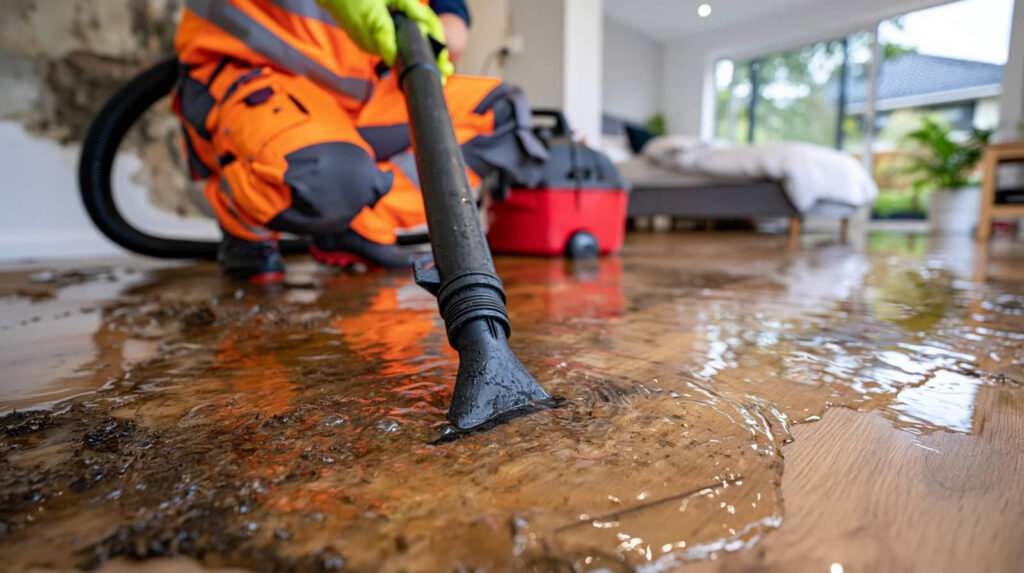
Effective water extraction techniques are vital for minimizing damage and preventing mold growth after a flood. You’ll want to rely on advanced extraction methods to tackle the volume of water quickly and efficiently.
Using high-powered pumps and wet vacuums can greatly enhance equipment effectiveness, ensuring you remove as much moisture as possible from your space.
Start by evaluating the area; prioritize rooms with the most standing water. It’s important to act fast—every moment counts in reducing potential damage.
If you’re unsure about the best approach, consider consulting professionals who specialize in flood recovery. Their expertise can guide you in selecting the right tools and techniques tailored to your situation.
Drying and Dehumidification Process
After water extraction, the next vital step in flood damage cleanup is implementing an efficient drying and dehumidification process.
You’ll need to set up dehumidifiers correctly, adjusting the settings based on the size of the affected area and the humidity levels. Aim for a balance that maximizes moisture removal without over-drying materials, which could lead to structural issues.
Effective airflow management is essential during this phase.
Position fans strategically to promote circulation, helping to dry out walls, floors, and furnishings uniformly. Keep windows and doors closed to prevent outside humidity from re-entering the space, but monitor indoor conditions regularly.
As you tackle this challenging process, remember that taking the time to ensure thorough drying will protect your property and foster a sense of safety and comfort as you restore your home.
You’re not alone in this journey—many have walked this path and emerged stronger.
Cleaning and Sanitizing Affected Areas
Once you’ve confirmed the affected areas are adequately dried, it’s crucial to focus on cleaning and sanitizing to prevent mold growth and eliminate harmful bacteria.
Start by using a mixture of water and a suitable detergent to clean surfaces, ensuring you scrub thoroughly to remove any contaminants. Pay special attention to hidden corners and crevices, as these can harbor moisture and promote mold.
After cleaning, proceed with surface disinfection. Apply a disinfectant specifically designed for flood damage to kill any remaining bacteria. Be sure to follow the manufacturer’s instructions for contact time and dilution ratios for maximum effectiveness.
Incorporating mold prevention strategies, such as ventilating the space and using dehumidifiers, will further safeguard your home.
Restoring and Repairing Damaged Structures
As you begin the process of restoring and repairing damaged structures, it’s essential to assess the extent of the damage to ensure a thorough and effective recovery. Start by inspecting load-bearing walls, foundations, and roofs for weaknesses. This understanding will guide your approach to structure reinforcement, ensuring safety and stability.
Next, consider material selection carefully. Choose durable, water-resistant materials that can withstand future challenges, fostering a sense of security in your home. For instance, using treated wood or moisture-resistant drywall can greatly enhance resilience.
Don’t rush; this is a critical time for your home and peace of mind. Engaging professionals when needed can provide reassurance, making the rebuilding process feel less intimidating.
Final Inspection and Quality Assurance
Once the restoration process is complete, you’ll want to conduct a thorough damage assessment to verify nothing’s been overlooked.
It’s equally essential to confirm that extensive cleaning has been carried out and that moisture control measures are in place.
This final inspection ensures quality and provides peace of mind that your space is safe and sound.
Comprehensive Damage Assessment
While the cleanup process may seem complete, a thorough extensive damage assessment is crucial to ensure that no hidden issues linger beneath the surface.
You need to conduct a detailed damage evaluation to fully understand the flood impact on your property. This involves inspecting walls, floors, and hidden spaces like crawl spaces or attics, where mold or structural damage may hide.
Documenting every sign of damage helps confirm nothing is overlooked. By taking this step, you’ll not only safeguard your home but also foster a sense of belonging and security for everyone within it.
Thorough Cleaning Verification
After completing a detailed damage assessment, it’s time to focus on the final steps of the cleanup process: thorough cleaning verification.
This stage is vital for ensuring your space is truly safe and ready for use. Begin with a thorough inspection of all affected areas, checking for remaining debris, contaminants, or signs of mold.
It’s important to evaluate every nook and cranny, as overlooked spots can lead to future issues. Conduct a quality assessment alongside your team, discussing findings and confirming that all cleaning protocols were followed.
This collaborative approach not only fosters belonging but also reassures everyone involved that you’ve left no stone unturned. A thorough cleaning verification brings peace of mind, ensuring your environment is restored to its best.
Moisture Control Check
As you approach the final inspection, a meticulous moisture control check becomes essential for ensuring your space is genuinely safe and habitable.
Begin by conducting thorough moisture measurements in affected areas. Utilize calibrated tools to assess levels accurately; this step is vital for identifying hidden dampness.
Next, evaluate humidity control measures in place—are dehumidifiers functioning effectively? Maintaining ideal humidity levels is key to preventing mold growth and ensuring air quality.
Remember, it’s not just about drying surfaces; it’s about creating a healthy environment where you and your loved ones can feel secure.
Frequently Asked Questions
How Long Does Flood Damage Cleanup Typically Take?
Flood damage cleanup typically takes days to weeks. Your cleanup timeline hinges on recovery factors like the extent of damage, moisture levels, and the effectiveness of your response. Patience and thoroughness are essential during this challenging time.
Can I Handle Flood Cleanup Myself or Hire Professionals?
You can handle flood cleanup yourself, but consider personal safety and cost. If the damage is extensive, hiring professionals may save you time and ensure thoroughness, fostering peace of mind in the recovery process.
What Insurance Covers Flood Damage Cleanup?
Flood insurance typically covers cleanup costs, but you’ll need to check your policy’s coverage limits. It’s crucial to understand what’s included, ensuring you have the necessary support during this challenging time. You’re not alone in this.
Are There Specific Products for Flood Damage Restoration?
Yes, there are specialized flood restoration products, like moisture detection tools that help you identify hidden damp spots. Utilizing these tools ensures you tackle every corner, safeguarding your home and restoring comfort to your space.
How Can I Prevent Future Flooding in My Property?
To prevent future flooding, consider implementing effective drainage solutions and making landscaping modifications. Elevate flower beds and install rain gardens to direct water away, creating a welcoming environment while protecting your property from potential water damage.
Summary
Tackling flood damage cleanup is like starting on an epic quest—one that requires bravery, skill, and a dash of luck! By meticulously evaluating damage, prioritizing safety, and employing advanced water extraction and drying techniques, you’re not just restoring your space; you’re waging war against mold and moisture. So, roll up your sleeves, channel your inner hero, and transform your home back into a fortress of comfort and safety. You’ve got this!