After a basement flood, you may pump out the water, dry the floors, and still notice a musty smell coming from the drywall. That’s when mold remediation may be needed, because trapped moisture can allow mold to spread behind walls and under flooring. Cleanup and drying alone may not address contaminated materials or hidden growth, and delays can turn a water event into a larger health and structural concern.
Key Takeaways
- Flood cleanup removes standing water, but damp materials can still support mold growth.
- Mold remediation follows to eliminate hidden colonies and contaminated porous materials.
- Quick remediation reduces health risks like allergies, coughing, and eye irritation.
- It prevents mold from spreading in walls, insulation, and other low-airflow areas.
- Professional drying and humidity control help restore safe indoor conditions after flooding.
How Floodwater Causes Mold Growth
Floodwater creates ideal conditions for mold because it soaks porous materials, raises indoor humidity, and often leaves behind organic debris that mold can feed on.
You also bring in floodwater contaminants that add nutrients and can bind to dust and drywall, helping spores settle.
When you leave wet wood, carpet, insulation, or fabric in place, those materials keep moisture retention high and delay drying.
Mold then colonizes hidden cavities, wall bases, and floor layers where air moves slowly.
You can reduce risk by removing saturated items, opening the structure, and running dehumidifiers and fans as soon as it’s safe.
Acting fast helps your home dry evenly and keeps your space healthier for everyone in it.
Signs You Need Mold Remediation Now
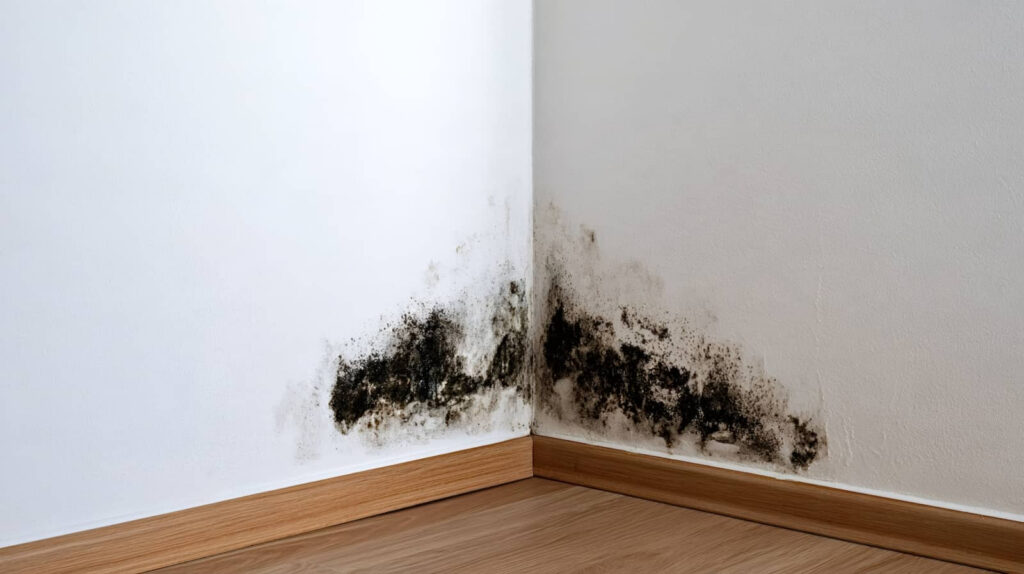
If you notice a persistent musty odor, visible growth on walls or ceilings, or worsening allergy symptoms indoors, you likely need mold remediation now.
You should also watch for warped drywall, peeling paint, or damp spots that return after drying. These signs point to hidden moisture and active colonies that your routine cleaning can’t fix.
Use mold detection to confirm the problem, especially in spaces that stayed wet after a flood.
Don’t ignore coughing, eye irritation, or headaches; those health risks can rise quickly in enclosed rooms.
Act fast, document what you see, and contact a qualified team so you can protect your home and stay comfortable with the people you live with.
What Mold Remediation Removes After a Flood
Mold remediation removes visible mold growth, hidden colonies behind drywall or under flooring, and contaminated porous materials that can’t be safely cleaned.
You also get removal of damp insulation, ceiling tiles, carpet padding, and warped wood that trap moisture and support mold types like Cladosporium, Aspergillus, and Stachybotrys.
Technicians target contaminated dust, debris, and surface films with removal methods such as HEPA vacuuming, damp wiping, and controlled demolition when materials are too damaged.
They isolate affected areas and extract items that keep spreading spores into your space.
You’re left with cleaner framing, drier surfaces, and a safer path for repairs.
This process helps you reclaim your home with a team that knows what belongs in a flood recovery plan.
Why Mold Remediation Should Follow Flood Cleanup
Once flood cleanup clears standing water and debris, mold remediation should follow right away to stop hidden moisture from turning into an active growth problem.
You can’t treat the flood aftermath as finished while damp materials still hold water inside walls, subfloors, or insulation. Mold can start quickly, and every hour adds risk to your home and your health.
By acting now, you support mold prevention and reduce the chance that spores spread through shared spaces. You also protect the structure from odor, staining, and material breakdown.
When you stay ahead of moisture, you make recovery more manageable for everyone in the home. Prompt remediation helps your space return to a safe, familiar condition without letting lingering dampness define the damage.
How Professional Flood Cleanup Prevents Mold
Professional flood cleanup helps prevent mold by removing water fast, drying materials thoroughly, and addressing hidden moisture before it can support growth.
You get better results when crews use preventive measures like containment, air movement, and targeted extraction. They check walls, flooring, and cavities with meters, so moisture control stays precise.
- Extract standing water quickly
- Remove soaked porous materials
- Dry framing and subfloors fully
- Monitor humidity until safe levels return
When you act early, you reduce spore spread and protect indoor air quality. That means your home can recover faster, and you stay part of a safer, healthier space.
Professional teams also document conditions, which helps you know the work met real standards.
Recap
You’ve probably heard that flood cleanup ends the problem, but that’s only partly true. The real issue is hidden moisture: even after standing water is gone, damp drywall, insulation, and flooring can still support mold within 24 to 48 hours. That’s why mold remediation must follow flood cleanup. You remove contaminated materials, isolate spores, and dry the structure fully. Quick, technical action protects your health, limits damage, and keeps your space safe.