When flooding occurs, it can greatly impact your property’s value and safety. Guide to Flood Cleanup starts with understanding the immediate steps for effective cleanup and remediation. You need to assess hazards, document damages, and use efficient water removal techniques while following essential safety precautions. From hidden moisture and contamination to long-term prevention strategies, each step matters when restoring your property and preparing for future flood risks.
Key Takeaways
- Prioritize safety by wearing protective gear and turning off utilities before entering flood-affected areas.
- Assess and document flood damage thoroughly with photographs and notes for insurance claims.
- Utilize sump pumps and water vacuums for efficient water removal from affected spaces.
- Implement long-term strategies like improved drainage and flood insurance to mitigate future risks.
- Collaborate with community members for sustainable flood prevention practices and infrastructure improvements.
How Flooding Affects Your Property Value and Safety
When a flood strikes, it not only disrupts your daily life but also poses significant threats to your property value and safety.
You may face property depreciation as water damage can compromise the structural integrity of your home. Safety hazards, such as mold growth and weakened foundations, can create ongoing risks for your family.
Insurance implications are critical; your policy mightn’t cover all damages, leading to potential financial burdens.
Resale challenges arise as buyers often perceive flood-affected properties as liabilities, further impacting market perception.
Additionally, the neighborhood impact can be profound, as flooding can lower values across the area.
Understanding these factors helps you navigate the aftermath and make informed decisions for your property’s future.
Essential Safety Precautions for Flood Cleanup
Before you begin the flood cleanup process, it’s crucial to prioritize safety to protect yourself and your property.
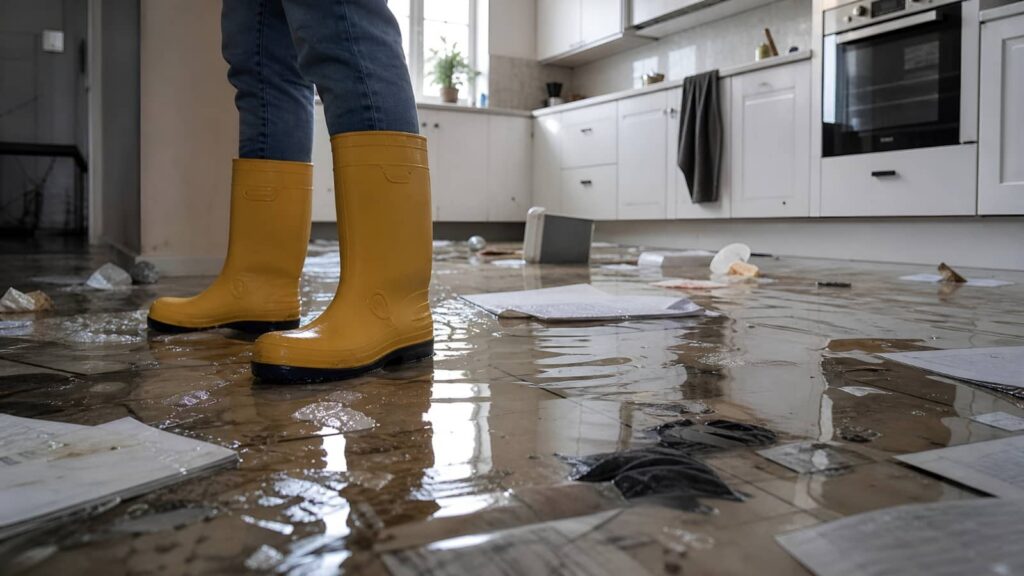
Start by evaluating potential flood hazards, such as contaminated water, unstable structures, and electrical risks. Equip yourself with personal protection gear, including gloves, masks, and waterproof boots, to minimize exposure to harmful substances.
Make sure you turn off electricity and gas supplies before entering affected areas to avoid accidents. Keep a first aid kit handy and know basic emergency procedures in case of injury.
Finally, work with a team whenever possible; there’s strength in numbers, and it fosters a sense of community. By taking these precautions, you can navigate the cleanup process more safely and effectively.
Step-by-Step Guide to Initial Flood Damage Assessment
Before you assess flood damage, make certain you’ve prioritized safety by following a checklist to protect yourself and others.
Once safety is secured, documenting the damage accurately will be vital for insurance claims and recovery efforts.
This guide will outline the essential steps to effectively evaluate and record the extent of the damage.
Safety First Checklist
As you prepare to assess flood damage, prioritizing safety is crucial to protect yourself and others. Here are some safety first checklist items to take into account:
- Wear protective gear: Use gloves, boots, and masks to shield yourself from contaminants.
- Check for hazards: Look for downed power lines, gas leaks, or unstable structures before entering.
- Assess water levels: Verify floodwaters have receded enough to safely navigate your property.
- Gather emergency supply kits: Have first aid supplies, food, and water on hand for any unforeseen situations.
These flood preparedness tips can help you stay safe during your assessment.
Documenting Damage Effectively
Documenting flood damage effectively requires a systematic approach to ensure you capture all necessary details.
Start your damage assessment by taking clear photographs of affected areas, ensuring to include wide shots and close-ups. Make notes on the extent of the damage, detailing specific items and structural impacts.
Use a checklist to keep track of everything, as this will help streamline the process. Organize your documentation chronologically to create a thorough timeline.
This thorough approach will be invaluable when filing insurance claims, as it provides concrete evidence of the damage.
Finally, keep copies of all documents and photos in a safe place, ensuring you have everything you need for a smooth claims process.
Effective Techniques for Water Removal and Drying
When tackling water removal after a flood, choosing the right extraction methods is vital for effective cleanup.
You’ll want to evaluate various drying equipment options to ensure thorough drying and prevent mold growth.
Understanding these techniques can greatly impact the success of your flood recovery efforts.
Water Extraction Methods
Effective water extraction methods are crucial for minimizing damage and preventing mold growth after a flood. You need to act quickly and utilize the right tools for efficient water removal.
Here are four effective techniques:
- Sump Pumps: These are essential for removing standing water from basements.
- Water Vacuums: Specialized vacuums can extract water from carpets and hard surfaces.
- Drainage Systems: Verify these are clear to allow water to flow away from your property.
- Professional Extraction: When the job’s too big, call in experts who use advanced equipment like pressure washers and dehumidifiers.
Combining these methods with absorbent materials can further enhance your cleanup efforts, ensuring a thorough and effective restoration process.
Drying Equipment Options
After water extraction, selecting the right drying equipment is essential to prevent further damage and mold growth.
Start with dehumidifier options to remove moisture from the air effectively. You’ll find both refrigerant and desiccant dehumidifiers; refrigerant units work well in warmer conditions, while desiccants excel in cooler environments.
Next, consider air mover types to enhance airflow and speed up drying. High-velocity fans and axial fans are popular choices. High-velocity fans circulate air rapidly, while axial fans are ideal for larger spaces.
Using a combination of these tools creates a synergistic effect, accelerating the drying process and safeguarding your space from potential hazards.
Identify and Tackle Mold Growth After Flooding
Mold growth can begin within 24 to 48 hours after a flood, making it essential to act swiftly.
To effectively tackle mold, start with mold identification. Look for signs such as:
- Dark spots on walls or ceilings.
- Musty odors that linger in the air.
- Visible moisture on surfaces or materials.
- Warped or discolored wood and drywall.
Once identified, employ remediation techniques: remove affected materials, clean surfaces with mold-killing solutions, and ensure proper ventilation to prevent future growth.
You can also use dehumidifiers to keep humidity levels low.
How to Pick the Right Flood Cleanup Service?
Identifying mold growth is just one part of the flood recovery process; the next step involves selecting a reliable flood cleanup service.
Start by evaluating flood service qualifications. Look for certifications, experience, and adherence to industry standards; this ensures you’re working with knowledgeable professionals.
Next, check their customer service reputation. Read online reviews and ask for references to gauge how they handle client concerns and communication. A responsive team can make a significant difference in your experience during this stressful time.
Don’t hesitate to ask questions about their methods and timeline; transparency is key.
Long-Term Strategies to Prevent Future Flood Damage
To effectively safeguard your property against future flood damage, you’ll need to adopt a multi-faceted approach that combines proactive planning and strategic investments.
Here are four essential strategies:
- Assess Flood Risk: Regularly evaluate your property’s flood risk using local data and community planning resources.
- Invest in Drainage Solutions: Implement advanced drainage systems and landscape design that redirect water away from your home.
- Purchase Flood Insurance: Secure thorough flood insurance to protect your assets and provide peace of mind.
- Enhance Emergency Preparedness: Develop a robust emergency plan and involve your community in sustainable practices and infrastructure improvements.
Frequently Asked Questions
What Insurance Coverage Should I Have for Flood Damage?
You should consider flood insurance options that include coverage for structural damage and personal property. Make certain you understand the coverage limits, as they directly impact your financial recovery after a flood event.
How Long Does Flood Cleanup Typically Take?
Flood cleanup typically takes days to weeks, depending on flood duration and the complexity of cleanup phases. You’ll want to assess damage quickly and prioritize tasks to expedite the recovery process effectively.
Can I Clean up Flood Damage Myself?
You can tackle flood damage yourself, but remember, DIY remediation isn’t always a walk in the park. Prioritize flood safety and assess your skills—sometimes, professional help might be the better path to recovery.
What Items Can I Salvage After a Flood?
You can salvage items like metal appliances, ceramic dishes, and some furniture after a flood. For effective flood recovery, prioritize drying and cleaning these salvageable items quickly to prevent further damage and mold growth.
How Can I Report Flood Damage to Authorities?
To report flood damage, contact your local authorities directly. Follow their reporting procedures for a flood damage assessment, ensuring you provide detailed information about the extent of damage and any immediate safety concerns you observe.
Recap
Tackling flood cleanup requires careful planning and decisive action. By prioritizing safety, utilizing effective water removal techniques, and addressing mold growth promptly, you can restore your property and peace of mind. Don’t underestimate the importance of long-term strategies; they can be your fortress against future floods. With community involvement and the right cleanup service, you’ll be better equipped than a superhero facing a villainous tide. Stay proactive, and you’ll safeguard your home for years.