When dealing with flood damage, you need a structured approach to restore your property effectively. Start by evaluating the damage and ensuring your safety. It’s vital to document everything for insurance purposes. Once you’ve cleared the area, focus on removing standing water and thoroughly drying affected spaces. But that’s just the beginning; understanding what materials can be salvaged and how to prevent future flooding is equally important. Let’s explore these essential procedures further.
Key Takeaways
- Inspect and document all damage thoroughly with photos and notes for insurance claims and repair planning.
- Prioritize safety by assessing hazardous conditions and wearing protective gear before cleaning.
- Remove water quickly using pumps and wet vacuums, and ensure proper drainage to prevent mold growth.
- Use effective restoration techniques, replacing damaged materials and reinforcing structural integrity during repairs.
- Implement flood prevention measures, such as proper drainage systems and emergency preparedness plans, to mitigate future risks.
Assessing the Damage
When evaluating the damage after a flood, it’s crucial to act quickly to prevent further issues. Start your damage evaluation by inspecting the property’s structural integrity. Look for visible cracks in the foundation, warped beams, or sagging ceilings. These signs indicate potential weaknesses that could compromise safety. Document everything with photos and notes to ensure you have a thorough record for insurance purposes.
Next, check for water damage in walls, floors, and ceilings. Use a moisture meter to gauge saturation levels, as this will help determine the extent of the damage. Pay close attention to hidden areas like crawl spaces and attics, where mold can develop if moisture lingers.
Finally, prioritize your findings. Identify which repairs are urgent and which can wait, making sure that your approach aligns with both safety and restoration goals. Taking these steps will help you maintain your home’s value and safety after a flood.
Ensuring Safety First
Before you begin any restoration efforts, assess the area for hazardous conditions like unstable structures or electrical hazards.
Make sure you wear appropriate protective gear, including gloves, boots, and masks, to shield yourself from contaminants.
Prioritizing your safety is essential to effectively handling the aftermath of flooding.
Assess Hazardous Conditions
As you prepare to assess hazardous conditions following a flood, it’s vital to prioritize your safety and that of others around you.
Start by identifying any hazardous materials that may have been exposed or mixed with floodwater, such as chemicals or sewage. Follow established emergency protocols to evaluate the area systematically.
Check for structural damage, unstable surfaces, or electrical hazards that could pose risks. Make sure the environment is well-ventilated to avoid inhaling any harmful fumes.
If you encounter any unknown substances, it’s imperative to avoid contact and report them to the appropriate authorities.
Wear Protective Gear
To ensure your safety during flood damage restoration, wearing the appropriate protective gear is essential.
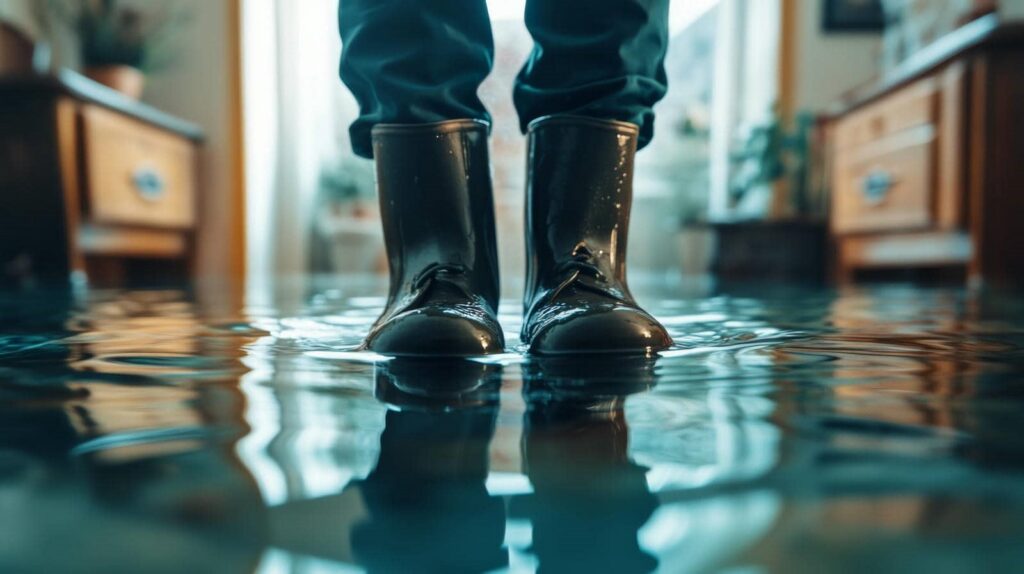
Start with sturdy, waterproof boots to shield your feet from contaminated water. Next, don protective clothing like coveralls or rubber overalls to keep your skin safe from hazardous materials.
Don’t forget gloves—heavy-duty rubber or nitrile gloves will protect your hands from sharp objects and chemical exposure. A face mask or respirator is vital as well, especially in damp environments, to filter out mold spores and other harmful particles.
Finally, goggles will protect your eyes from debris and splashes. By equipping yourself with the right safety equipment, you safeguard your health and demonstrate responsibility towards yourself and your team during restoration efforts.
Documenting the Incident
How can you ensure that every detail of the flood damage is accurately captured? Start by creating a thorough incident report. Note the date, time, and location of the flooding, along with any relevant weather conditions. Be specific about the types of damage observed—structural, electrical, or personal belongings affected.
Next, utilize photographic evidence to document the scene. Take clear, well-lit photos from multiple angles, making sure you capture both wide shots and close-ups of the damage. This visual documentation will support your incident report and provide essential details for insurance claims or restoration services.
Finally, gather witness statements if applicable; these can offer additional context. By meticulously documenting the incident, you protect your interests and contribute to a smoother restoration process.
This diligence ensures that you’re prepared to address the aftermath effectively, fostering a sense of community as you navigate this challenge.
Removing Standing Water
To effectively remove standing water, start by evaluating the water levels in the affected areas.
Use appropriate equipment, such as pumps or wet vacuums, to extract the water efficiently.
Finally, ensure proper drainage to prevent future accumulation and promote thorough drying.
Assess Water Levels
Evaluating water levels is essential for effective flood damage restoration, as even a few inches of standing water can lead to significant structural damage and health hazards.
Start by conducting a thorough water level measurement to determine the extent of the flooding. Use a reliable measuring device to gauge the depth and spread of the water, which is vital for a detailed flood impact assessment. Document these measurements meticulously, as they’ll guide your next steps in the restoration process.
Pay attention to areas where water tends to accumulate, as these spots may require more urgent attention. Remember, addressing standing water promptly and mitigates damage and safeguards your health and that of your loved ones.
Use Appropriate Equipment
Once you’ve assessed the water levels, it’s time to focus on removing standing water effectively.
For efficient water extraction, you’ll need to use a combination of pumps and wet vacuums. Submersible pumps are ideal for deep water, while a wet vacuum can handle smaller areas.
Don’t forget to check for hidden pockets of water, as they can lead to mold growth. Incorporate moisture meters to monitor humidity levels throughout the process, ensuring you’re not leaving any dampness behind.
Properly training your team on equipment usage is essential; it helps everyone feel confident and connected during this challenging time.
Ensure Proper Drainage
Effective drainage is essential for removing standing water and preventing further damage to your property. Start by evaluating your drainage systems to confirm they’re functioning correctly.
Check for blockages that might restrict water flow, such as debris or sediment buildup. Clear these obstructions to improve drainage efficiency.
Utilize pumps to expedite water removal, especially in areas where water has pooled heavily. If your property is prone to flooding, consider installing or upgrading drainage systems, like French drains or sump pumps, to manage excess water effectively.
Regular maintenance is key; inspect your drainage systems routinely to ensure peak performance.
Drying and Dehumidifying
As you begin the drying and dehumidifying process, it’s vital to act quickly to minimize damage and prevent mold growth. First, remove standing water using pumps or wet vacuums.
Once the bulk of the water is gone, set up high-capacity fans to enhance air circulation. This step is essential for effective moisture control.
Next, focus on dehumidifier usage. Position dehumidifiers strategically in affected areas to extract moisture from the air. Monitor humidity levels regularly, aiming for a range between 30% and 60%.
It’s important to empty the dehumidifier frequently to ensure peak performance. Keep windows and doors closed to prevent external humidity from entering.
If possible, use heat sources to increase the temperature, which aids in drying. By following these steps diligently, you’ll greatly reduce the risk of long-term damage and create a safer environment for everyone.
Cleaning and Sanitizing Affected Areas
While drying the affected areas is essential, cleaning and sanitizing them is equally important to secure a safe environment. Neglecting this step can lead to mold growth and health risks.
Here’s a concise approach to effectively clean and sanitize:
Mold Remediation: Inspect for signs of mold. If you find any, wear protective gear and remove contaminated materials. It’s vital to act quickly to prevent further spread.
Disinfectant Application: Use a commercial-grade disinfectant to treat surfaces. Make sure you follow the manufacturer’s instructions for dilution and contact time to maximize effectiveness.
Thorough Cleaning: Clean all surfaces with soap and water before applying disinfectant. Pay special attention to areas that may have absorbed water, like carpets and walls.
Repairing and Restoring Property
After successfully cleaning and sanitizing the affected areas, the focus shifts to repairing and restoring your property.
Begin by evaluating the damage to your structure and belongings. Identify which materials can be salvaged and which need replacement. Use effective property restoration techniques, like drying and dehumidifying, to prevent mold growth and further degradation.
Next, consider renovation techniques that enhance both functionality and aesthetics. For walls, you might need to replace drywall or apply a fresh coat of paint to ensure a clean finish.
Flooring may require replacement, so opt for water-resistant options to withstand future incidents.
Don’t forget to address electrical systems; consult a professional to ensure safety.
Finally, reinforce your property’s defenses against future flooding by reviewing drainage systems and landscape grading.
Preventing Future Flooding Issues
To effectively prevent future flooding issues, it’s essential to assess both your property’s vulnerabilities and the surrounding environment.
By implementing strategic flood prevention measures, you can safeguard your home and community. Here are three key steps to evaluate:
- Improve Drainage Solutions: Confirm that your gutters and downspouts are clean and direct water away from your foundation.
Contemplate installing French drains or sump pumps to manage excess water effectively.
- Landscaping Adjustments: Grade your yard away from your home to facilitate proper water runoff.
Use native plants that can absorb more water and reduce erosion.
- Flood Barriers: Invest in flood barriers or sandbags to protect vulnerable areas during heavy rains.
These can be critical in diverting water away from your property.
Frequently Asked Questions
How Long Does the Flood Damage Restoration Process Usually Take?
The flood damage restoration process typically spans several days to weeks, depending on the severity of damage. Understanding the restoration timeline and recovery phases helps you manage expectations and navigate the process effectively.
Should I Hire Professionals or Handle Restoration Myself?
You should hire professionals. While DIY might seem cheaper, consider the hidden costs and potential risks. Professionals ensure thorough restoration, preventing future issues, while your time and effort could be better spent on other priorities.
What Insurance Coverage Is Needed for Flood Damage?
You’ll need flood insurance to protect against water damage. Review your coverage options, including dwelling, personal property, and additional living expenses, to ensure you’re fully covered in case of a flood event.
Can Flood-Damaged Items Be Salvaged or Reused?
Think of flood-damaged items as wounded soldiers. Many can be salvaged using effective restoration methods, like deep cleaning or drying. Prioritize sentimental and functional belongings, as they often hold the most value to your home’s heart.
What Are the Health Risks Associated With Flood Damage?
Flood damage poses serious health risks, including mold growth and exposure to contaminated water. You may experience respiratory issues, skin infections, or gastrointestinal problems, so it’s essential to address these hazards promptly and effectively.
Wrap-Up
Restoring flood damage requires a methodical approach to ensure safety and effectiveness. By following these steps—from evaluating damage to implementing prevention strategies—you increase your chances of a successful recovery and safeguard your property against future incidents. Stay proactive, and remember that thorough preparation can make all the difference in minimizing flood impacts.